


How to Find a Keynote Speaker: The Best Search Routes for Your Event
Sometimes the search for a keynote speaker begins with an unremarkable sentence: “We still have 45 minutes to fill on the afternoon of day two.” An annual meeting may have ended with a keynote for years. The slot is part of the format. This year’s name is the missing piece.
There is nothing wrong with that starting point. The trouble begins when the next sentence is, “AI is everywhere, so let’s get an AI speaker.” Another planning team may decide it has been too long since the event featured an athlete. The market has already been narrowed to a category before anyone has discussed what the session needs to do.
Finding the right keynote speaker does not start with a name or a topic. It starts with the effect that person should have in the room. With that sentence on paper, even a messy mix of Google results, bureau suggestions, AI research, and referrals starts to make sense.
For the moment, “find” means exactly that. The finish line here is a longlist worth discussing, not a signed agreement. Calls, auditions, fee comparisons, and contracts can wait for the next round of work.
Before you search, decide what the keynote should do
A keynote is not a large-group workshop with the chairs facing forward. If a team needs to solve a defined problem, give people time to work on it. The keynote has another job: it can open a subject that has been hard to approach, tilt the way the room sees an issue, or make the close of the day feel like an ending rather than the last item on a spreadsheet.
Before opening a search box, the planning team should complete one sentence: “After this keynote, we want people to …” The answer may be intellectual, emotional, or both. Perhaps attendees should understand why a shift in their industry matters. Perhaps they should leave curious enough to continue a conversation that has been avoided.
Try filling in a few blanks before anyone suggests a name:
- The thought people should carry into the next session
- The mood the room needs at that point in the day
- The conversation you hope to hear during the break
- The balance between useful information and entertainment
- A question the speaker is allowed to leave unresolved
- The sentence you would love to hear from an attendee afterward
The last blank is especially revealing. “She was impressive” tells you almost nothing. “Now I understand why this matters to my job” gives the search a direction. So does the slightly less comfortable response, “We need to talk about that at tomorrow’s team meeting.”
Define the effect, then combine search routes
You may already have the slot. Keep it. Just do not let an empty box on the agenda choose the topic before you know what the room needs.
Finding keynote speakers with Google
Google is where many searches begin, and the queries are usually plain: “leadership keynote speaker,” “speaker for a manufacturing conference,” or “digital transformation keynote.” Within a few minutes you can move from a results page to a speaker’s site, then to an interview or a video from an earlier event.
You control that browsing trail, which is useful. Still, Google searches its index, not every stage in the world. It can surface pages it has discovered and rank them using signals for relevance and quality. Its own guidance describes SEO as work that helps a search engine understand a page and helps people find it.[1]
So read the first page for what it is: a list of people who are easy to find. Some will also be superb on stage. Others will simply be good at digital marketing. A polished site says something about the business behind the speaker, but the browser is not the ballroom.
Using AI to search for a keynote speaker
ChatGPT, Gemini, and Claude can now bring current web sources into an answer.[2][3][4] That is handy, but the first thing I would ask an AI for is not a name. I would use it to pressure-test the brief.
Give it the awkward details that a two-word search query leaves out:
- A two-day leadership meeting with 280 people in the room
- A keynote scheduled after a demanding day of technical sessions
- An audience split between experienced users and outspoken skeptics
- A wish for lively dinner-table conversation, not another checklist
- An invitation for the AI to point out what the brief still fails to explain
Then ask for people, but keep your hand on the research. Click the cited pages. Check whether the supposed conference video is a full session or a 40-second montage. The AI companies warn that even web-backed answers can miss context or get facts wrong. I would put each suggested name in a notebook with a question mark beside it.
Speaker bureaus: market knowledge in exchange for research time
Profile pages have a way of making everyone sound equally versatile. A bureau should know the differences that disappear in the adjectives. It may remember that one speaker is painstaking and quiet, while another can lift the energy after lunch without staging a pep rally. That memory is what the client is buying.
If your team has neither the time nor the desire to click through a hundred profiles, hand the bureau a sharp brief and ask for a small set of names. Ramsauer Redner gives a useful example of what the work may include: a content discussion with the client, suggestions, an availability check, and fee negotiations.[5]
Does a bureau make the speaker more expensive?
Beware of a sweeping “never.” Bureau economics are not identical. The German company 5 Sterne Redner says its client price stays the same for speakers it represents exclusively; the commission sits inside the firm’s agreement with the speaker.[6] Ramsauer Redner publishes another model and says an average handling fee of 20 percent is added to the speaker’s fee.[5]
Neither arrangement is automatically suspect. Research, judgment, and coordination have value. For now, one question will do: “What is the total price to us, and what work does that cover?” Save the contract comparison for the booking stage.
Speaker directories and online marketplaces
A directory gives you more structure than Google and less guidance than a bureau. On redner.org, a German-language example, you can browse by name or subject, play demo videos, and find a direct route to the speaker or management.[7]
Spend ten minutes there and you will learn how broad the market is. Just do not read the order of the profiles as a judges’ scorecard. Look for the rules of entry, paid placement, and stale details before you give a listing too much weight.
Printed speaker catalogs: slower, but still useful
The red “Top 100 Excellent Speakers” catalog from Speakers Excellence is still available in print as well as online.[8] Paper is slow, of course. A bio cannot change overnight, and there is no play button beside the headshot.
Oddly enough, that slower pace can help. Leafing through a catalog breaks the habit of typing the same three topics into every search box. You may notice a person you would never have searched for. Put the name on the longlist, but let the catalog remain what it is: a source of ideas.
Which search route fits the situation?
These routes do not have to compete. Each is good at a different part of the search and comes with a blind spot.
| Search route | Most useful when … | Strength | Watch for |
|---|---|---|---|
| the team wants to research independently and compare many websites | broad reach and direct access to a speaker’s own material | search visibility is not the same as stage performance | |
| AI tools | the assignment is still fuzzy | a dialogue about audience, occasion, and effect followed by web research | names, facts, and sources require verification |
| Speaker bureau | time is tight and advice is valuable | market knowledge, context, and a curated set of suggestions | understand the business model and total price |
| Speaker directory | the team needs a quick view of the market | many profiles grouped by topic | a listing or high placement is not an independent quality judgment |
| Live experience and referrals | someone has seen the speaker with a real audience | firsthand evidence of presence and audience response | fit for a different audience remains unknown |
| Social media | organizers want to keep discovering new names over time | a view of current topics, tone, and public work | short clips reward different skills than a full keynote |
Start with speakers you have seen live
The cleanest evidence may be the conference badge still hanging around your neck. In a full 45-minute session you notice the slow patch at minute 22, the moment an argument finally lands, and the people leaning forward three rows away. A profile page cannot give you that view.
What disappears is the name. Six months later, someone in the planning meeting remembers “that terrific woman at the client conference,” and nobody can find the agenda. A colleague supplies half a surname; Google supplies the rest. The live impression and the online search have done different parts of the same job.
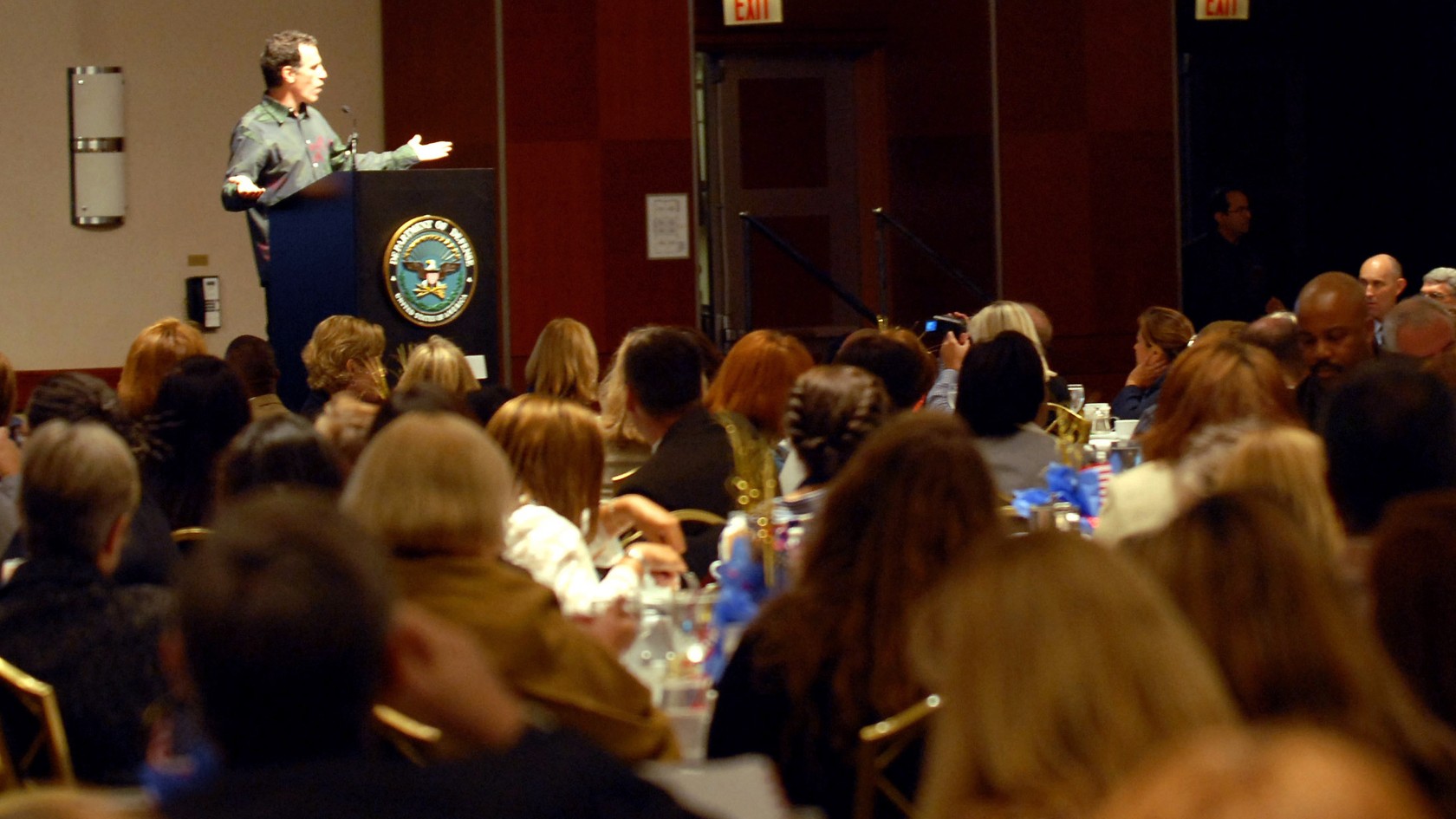
You do not need special software. A note in the event folder is enough if it records the place, the quality you remember, and a likely audience. A dozen honest notes collected over two years are far more useful than a vague memory of someone who was “really good.”
Ask your professional network for referrals
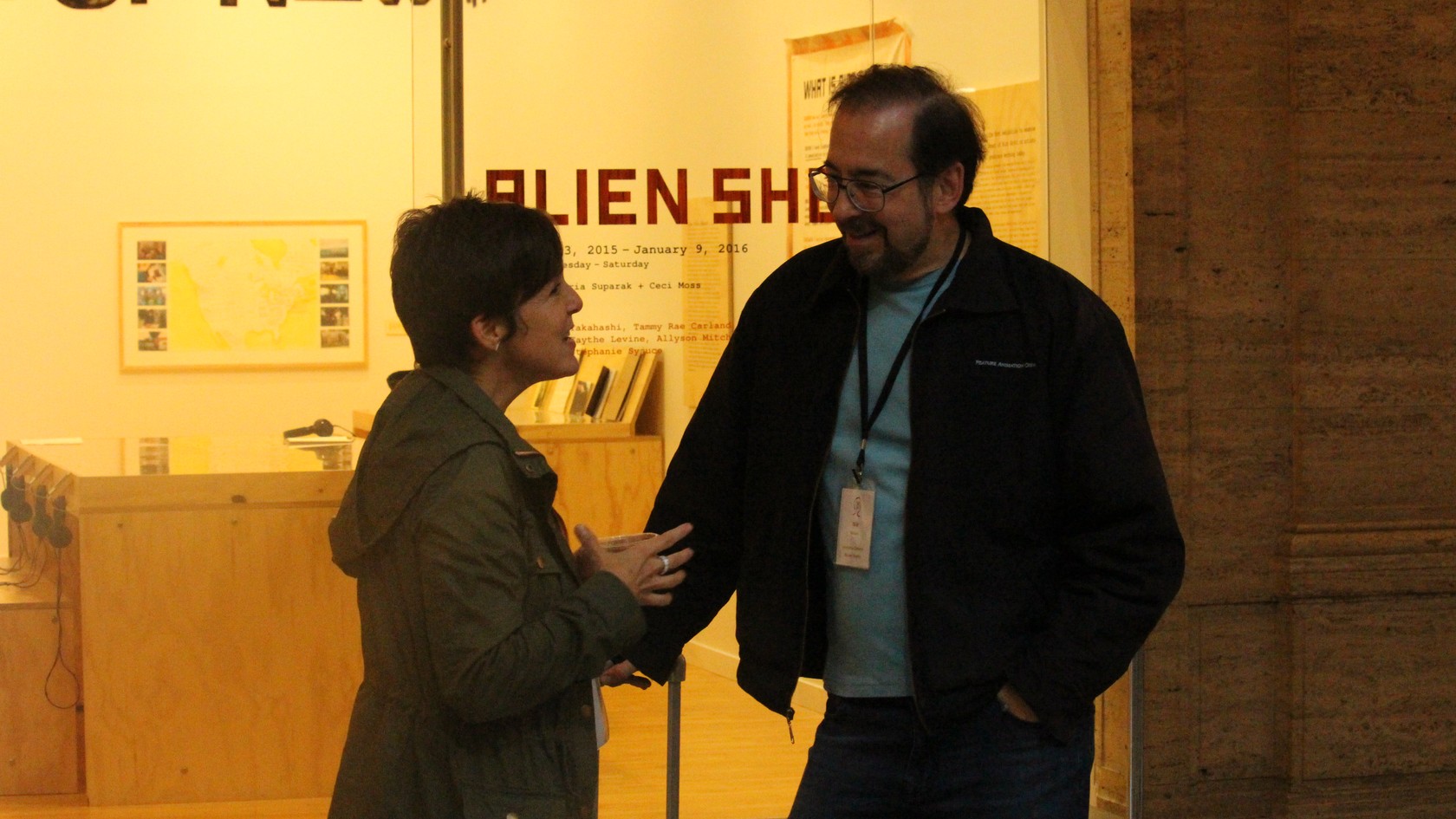
Colleagues, clients, and business partners can answer a question that a search engine cannot answer from experience: “Which keynote speakers have you seen in the past few years who were genuinely good?” Follow up. What worked? Who was in the audience? Was the talk dense with ideas, funny, challenging, or emotional?
A referral does not transfer automatically from one event to another. A speaker who was excellent after dinner at a sales conference may be wrong for a technical audience at 9:00 a.m. The referral provides a name and credible evidence from one room. Fit with your intended effect still needs to be evaluated later.
Use social media to discover, not just search
LinkedIn and YouTube are good at putting a name in your path. Often the timing does the work: a clip appears on Monday, and on Tuesday the planning meeting turns to the empty keynote slot. That is discovery, not a disciplined market search.
A short video still tells you something about voice and subject matter. It cannot show the middle 25 minutes of a keynote, where thin ideas usually become obvious. Social platforms also favor fast attention. Use them to feed a watchlist, not to make the whole decision.
Recurring events need a speaker memory
Annual events create a particular challenge. Organizers usually want to give returning guests a different speaker each year. Even an excellent keynote speaker rarely becomes a traditional repeat supplier for the same event series.
Keep the list open all year, not only during the frantic twelve weeks before the date. Perhaps the newest person on the team saves LinkedIn clips. Perhaps the colleague who has planned the event since 2018 remembers old conference programs almost page by page. Those habits may sometimes track with age, but plenty of people break the pattern. What matters is that the names end up in one place.
Should you use a bureau or search on your own?
Some organizers happily spend a Friday afternoon following links from one speaker to the next. Others would pay to avoid that Friday altogether. The first group can research for itself; the second has a good reason to call a bureau. There is no prize for choosing the more labor-intensive route.
The most realistic answer may be “both.” Bring a bureau the four names gathered through Google and referrals. Add a speaker you saw last year to the bureau’s suggestions. A useful process can look untidy on paper.
The first hour of the speaker search
Resist opening five speaker profiles for one hour. Take a blank page instead. Write the fixed slot at the top, then finish this sentence in ordinary language: “After the keynote, we want people to …” Add whatever is true about the audience and the mood at that point in the program.
Now the tools have something to work with. Google gets sharper search terms. The AI gets the awkward context. A bureau can tell why its suggestions belong on your desk, and a colleague can recommend someone for a reason instead of tossing out a famous name.
Your longlist may end up with one person from a catalog, two from Google, a referral, and a name recovered from an old agenda. Good. Selection begins on the next page. For this page, the win is that “something about AI” has turned into a search for a particular effect in a particular room.
If artificial intelligence fits your event, my AI keynote speaker page describes the talks I offer. You can also read the German version of this guide: Keynote-Speaker finden.

Jan Ditgen
About the author
- 1,000+talks
- CSPCertified Speaking Professional
- 4keynote languages
Jan Ditgen is a keynote speaker on artificial intelligence. He has delivered more than 1,000 talks and holds the Certified Speaking Professional (CSP) designation from the National Speakers Association, the highest international designation for professional speakers.
He did not begin his career in computer science, which helps him explain artificial intelligence to audiences without a technical background in a clear, practical and engaging way. He speaks at companies, associations and professional conferences in German, English, Spanish and French. His keynotes examine the practical use of AI at work, its opportunities and risks, and how people can preserve their own judgment when answers are always available.
Jan Ditgen has written several specialist books. His books and articles give him room to examine questions about AI that a 60-minute keynote can only touch on. He connects his experience with AI and the events industry with clear analysis for companies and event organizers. Jan Ditgen is available to book as an AI keynote speaker on artificial intelligence.
Sources
- Google Search Central: In-depth guide to how Google Search works and SEO Starter Guide
- OpenAI Help Center: ChatGPT Search
- Google Gemini Help: Use Deep Research in Gemini Apps
- Anthropic Help Center: Enabling and using web search
- Ramsauer Redner: Questions and answers on the German speaker bureau’s services and pricing
- 5 Sterne Redner: The bureau’s price explanation for exclusively represented speakers
- redner.org: German speaker directory with profiles, videos, and contact options
- Expert Marketplace: Top 100 Excellent Speakers online and print catalog
- Elaine Wilson, U.S. Department of Defense: Audience listening to Trevor Romain. License: Public domain. Edit: cropped to fit the page format.
- Cre8con / David Loitz: Networking at the 2015 Portland Creative Conference. License: CC BY-SA 2.0. Edit: cropped to fit the page format.
Contact
Phone: +49 221 80 14 96 0
AI Speaker Jan Ditgen
EWK Vortrags GmbH & Co. KG
Gartenstr. 6
50996 Cologne
Germany
Last updated: September 3, 2026
Contact

Gartenstr. 6
50996 Cologne
Germany
Phone: +49 221 - 80 14 96 11
Fax: 0221 - 80 14 96 29
E-Mail: ki@ewk-institut.eu