

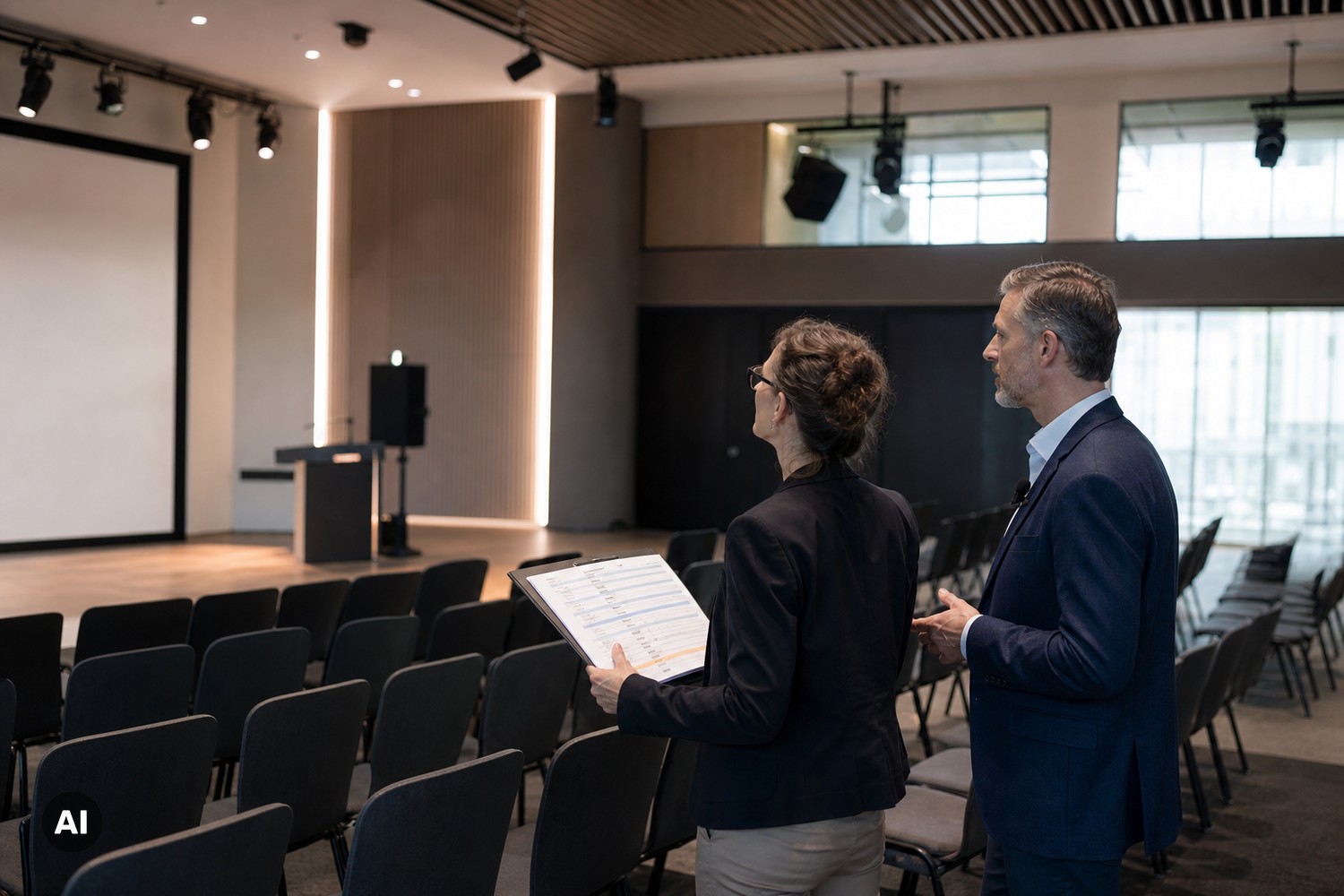
Keynote, Short Talk, Expert Presentation, or Workshop: Which Format Fits Your Event?
A first draft of an event schedule often contains the words “keynote, 45 minutes” before anyone has decided what those 45 minutes are supposed to accomplish. Should the speaker open up the subject of the day? Break a stale discussion loose? Teach the audience how a particular application works? Or give participants enough time and structure to try something themselves?
A format label looks reassuringly final on a spreadsheet. Often, it is just a placeholder. One planner asks for a keynote while another describes a short inspirational talk, and both have nearly the same session in mind. The reverse happens too. A program may advertise two keynotes: one gives the conference its intellectual frame; the other walks through a product in detail.
Start with the result you want in the room. The label can wait. Keynote, expert presentation, guest talk, and motivational speech are useful shorthand, but they answer different questions. One tells you where a session sits in the program. Another hints at what will be taught. A third says something about who is speaking. None amounts to a complete specification.
The terms do not divide as neatly as they seem
The dictionaries do not settle the matter. Cambridge describes a keynote address as the most important speech at a large meeting.[1] Open the German Duden and the emphasis shifts: its keynote speaker delivers an Impulsvortrag, literally a talk that supplies an initial stimulus.[2] Each definition sounds reasonable. Put them side by side, however, and the supposedly clear line begins to wander.
Translating Impulsvortrag brings the same problem into view. English-speaking organizers use short talk, spotlight talk, inspirational talk, and plain old presentation for sessions that do similar work. I use short talk here for a concentrated contribution built around one question or point of view. It is a practical choice for this article, not the name of an established category.
That looseness need not derail the planning. Conference vocabulary has accumulated across countries, professions, and local habits. Treat the label as an opening clue. Trouble starts only when no one asks a second question.
A keynote has a particular job in the program
Look first at the schedule. A keynote usually occupies a deliberate spot. In the morning, it can give several hundred people a shared starting point and a question that follows them into later sessions. In the final slot, it may pick up threads from the day and tie them into a conclusion that survives the last slide.
Position is a useful clue, though never a rule carved in stone. Most conferences name one keynote or perhaps two. Shorter contributions can recur before a panel, at the start of a track, or in that difficult half hour after lunch.
The keynote often has a wide-angle job as well. It deals with the change behind the individual projects or the central issue holding a conference together. Wide angle should not mean fuzzy. Evidence, technical depth, and precise examples all belong in a keynote when they help the audience see why the larger picture matters.
A short talk puts one idea under a bright light
A short talk earns its place by concentrating attention. Perhaps the panel needs one uncomfortable question before the moderator begins. Perhaps a team needs a fresh way of looking at a familiar problem. Twenty disciplined minutes can be more valuable for that purpose than a broad tour of the subject.
No bright line separates this from a keynote. Good keynotes generate impulses of their own, and a short talk in the opening slot may do a keynote's work. So there is little value in correcting the planner's vocabulary. Ask what “short” is meant to signal. Is time tight? Is there one idea to pursue? Or did the phrase simply sound right on the invitation?
That last answer is perfectly workable. It gets the conversation started. Before the speaker writes anything, though, the placeholder needs to become an assignment.
An expert presentation is primarily there to teach
An expert or technical presentation has a more tangible promise. By the end, listeners should understand something they could not previously explain. That might be the way an application works, the logic of a process, or the consequences of a particular technical choice.
For some subjects, the honest structure is a sequence. Establish condition A. Demonstrate what happens in step B. Then pause over result C. Listeners need enough detail to follow the method for themselves, and examples should help them test their understanding instead of merely recognizing the vocabulary.
That does not make the expert presentation more substantial than a keynote. It has a different primary assignment. Keynotes and short talks often try to change how people see an issue, open a larger context, or create readiness for a decision. An expert presentation teaches people how to understand or handle something more accurately. A good technical speaker can motivate, and a good keynote speaker can explain. The difference is one of emphasis.
From the intended result to a useful format
Begin with the session's job. Other labels may then describe where the speaker comes from or what kind of experience they bring.
What each label is actually telling you
This is a planning aid, not an industry standard. It shows the question that each label usually answers and where the terms overlap.
| Label | Main dimension | Typical job | Possible overlap |
|---|---|---|---|
| Keynote | Place in the program | Frame the event or connect its ideas | May be motivational, technical, or practical |
| Short talk | Focus and often length | Start one thought or shift in perspective | May occupy the keynote slot |
| Expert presentation | Learning goal | Explain knowledge in useful detail | May be delivered by a guest practitioner |
| Motivational talk | Intended effect | Build courage, energy, or readiness to act | May be a keynote or short talk |
| Guest talk | Relationship to the host | Bring in an outside voice | May take any presentation format |
| Practitioner talk | Speaker's perspective | Report from first-hand application | May be technical or motivational |
| Workshop | Mode of participation | Practice, test, or develop something together | May contain short presentation segments |
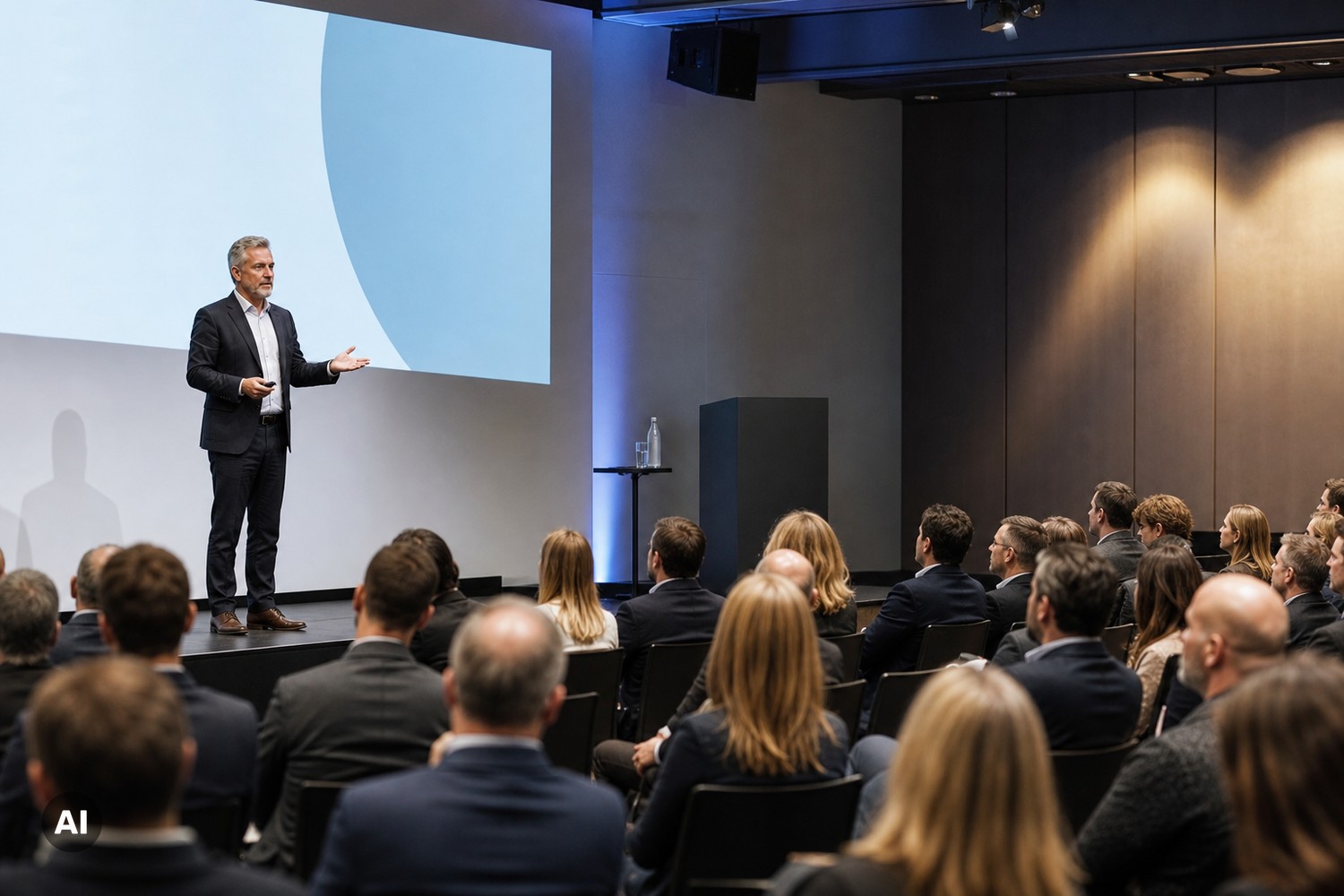
A workshop belongs to a different family of events
A workshop shifts the center of attention. Participants do not spend most of the session listening. They discuss an issue in smaller groups, test a method, develop an answer together, or apply new knowledge to a case of their own.
A University of Florida guide lists small groups, active involvement, and application of learning among the hallmarks of a workshop. The authors also point out an awkward truth: plenty of events sold as workshops turn out to be lectures, seminars, or demonstrations.[3] Printing the word on a badge does not make the method participatory.
Short presentation segments have their place. A facilitator often has to explain a concept before anyone can use it. But 55 minutes of slides and a rushed five-minute Q&A do not add up to a workshop. If the title leaves you unsure, look at the room. Rows of chairs point every pair of eyes toward the front. Tables, materials, and unhurried working time tell participants that they are expected to contribute.
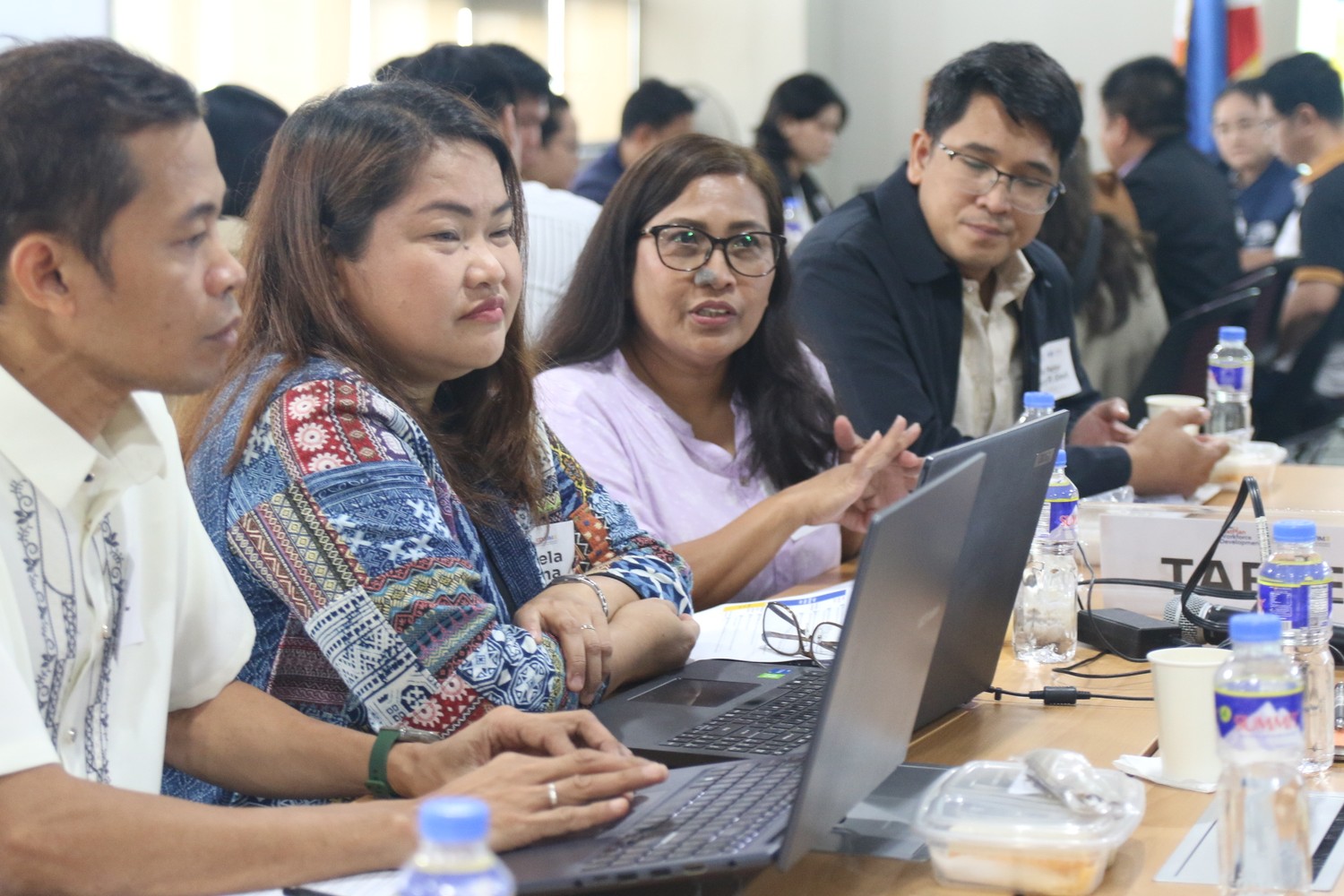
Guest talk and practitioner talk describe the speaker
A guest talk tells you little about the shape or intended result of the session. It says that someone has been invited from outside the organization, conference, or institution. Guidance from Singapore Management University presents an industry guest lecture in the same terms: an outside practitioner brings experience and perspectives that complement the host's usual teaching.[4]
The guest might open the conference, teach a narrow technical subject, or contribute ten minutes before an internal discussion. “Guest” tells the audience how this person relates to the host. It says nothing yet about the shape of the session.
Calling something a practitioner talk makes a different promise. Listeners expect knowledge earned while using the method, managing the technology, or living through the change. A plant manager can recount the introduction of a new system from the person responsible for making it work. A researcher will probably approach the case through data and theory. Neither version is automatically better; the two speakers have been invited to answer different needs.
When the agenda promises a practitioner, ask what that person's relevant experience actually is. A title on a business card will not answer the question. Nor will years on the job automatically produce a clear talk. The useful combination is first-hand knowledge and enough judgment to select the parts this particular audience needs.
A motivational talk is defined by the response it seeks
With a motivational talk, the desired response is built into the name. People should feel more able or willing to take the next step. Cambridge likewise defines a motivational speaker by the effect sought in the audience.[5] The label tells you very little about running time, technical depth, or position in the schedule.
That is why it overlaps so easily with other formats. An opening keynote may be motivational. A brief talk may move a group out of a passive stance. Even a technical presentation can create energy when people finally understand how to solve a problem that has been holding them back.
The contrast is easiest to see against the expert presentation. Its primary brief is, “Explain how this works.” The motivational brief is closer to, “Help us begin.” One session can combine both. The planner should still decide which purpose wins if time becomes tight. Otherwise the talk may become crowded with instruction or finish with enthusiasm when the audience needed practical direction.
One session can carry several accurate labels
Imagine the final speaker of the day. She works outside the host organization, has implemented the change herself, and has been asked to send a tired audience home ready to act. The agenda calls her session the closing keynote. Guest speaker, practitioner, motivational speaker, and keynote speaker all fit. Each label adds one piece of information about the same appearance.
That is why a debate about the technically correct name often goes nowhere. “Is this really a keynote?” becomes useful only when the person asking can explain what feels wrong. Perhaps the slot lacks prominence. Perhaps the subject is too narrow to frame the event. Or perhaps the team simply wants a title with more billing than “presentation.”
Now there is something to discuss, because each concern would change the brief. The vocabulary contest would not.
Describe the desired result before naming the format
Give a speaker a concrete outcome and the conversation changes immediately. A planner might say:
- “We want our employees to become curious about a new subject and ready to discuss it.”
- “At the opening, attendees need a wider view of the changes they will face over the next two years.”
- “After the session, everyone should understand how the application works and which first steps are realistic in daily work.”
- “The final speaker should connect the day's ideas and send people home with energy to act on them.”
Curiosity in the first example could be sparked by a focused short talk. The wide view requested for the opening sounds like keynote work. Understanding an application calls for a detailed explanation and perhaps an exercise afterward. Bringing a day to a satisfying close gives the fourth speaker a different task altogether. These are provisional choices, ready to be tested against the audience and the time available.
Six questions are more useful than a list of formats
Before searching for a keynote or workshop, the planning team should answer six questions:
- When people leave the room, what should they see, understand, feel, or do differently?
- Why is the session in this particular slot? Is it there to open, connect, deepen, or close the program?
- What do the participants already know before they take their seats?
- Which details must be properly taught, rather than mentioned on the way past?
- Will people spend the session listening and asking questions, or do they need to work on a task?
- Whose perspective is missing from the room: a researcher, an experienced practitioner, a wide-angle thinker, or an encouraging voice?
With those answers on the table, timing and room layout stop being abstract production details. Group size suddenly matters. So do the available technology and the amount of participation the schedule can honestly accommodate. A speaker may suggest a morning keynote and a hands-on session later, rather than trying to make one format do both jobs. In another case, the right answer may be 20 exact minutes where the first draft allowed an hour.
The right term can make an initial conversation faster. The real clarity comes from finishing a different sentence: “When this session ends, our audience should ...” A planner who can complete that thought has already written the most important part of the brief. Whether the agenda eventually says keynote, short talk, motivational presentation, or simply talk is secondary.

Jan Ditgen
About the author
- 1,000+talks
- CSPCertified Speaking Professional
- 4keynote languages
Jan Ditgen is a keynote speaker on artificial intelligence. He has delivered more than 1,000 talks and holds the Certified Speaking Professional (CSP) designation from the National Speakers Association, the highest international designation for professional speakers.
He did not begin his career in computer science, which helps him explain artificial intelligence to audiences without a technical background in a clear, practical and engaging way. He speaks at companies, associations and professional conferences in German, English, Spanish and French. His keynotes examine the practical use of AI at work, its opportunities and risks, and how people can preserve their own judgment when answers are always available.
Jan Ditgen has written several specialist books. His books and articles give him room to examine questions about AI that a 60-minute keynote can only touch on. He connects his experience with AI and the events industry with clear analysis for companies and event organizers. Jan Ditgen is available to book as an AI keynote speaker on artificial intelligence.
For your event planning, learn more about Jan Ditgen as an AI keynote speaker artificial intelligence. Read the German version: Keynote, Impulsvortrag oder Workshop: Was passt?.
Sources
- Cambridge Dictionary: definition of “keynote address”
- Duden: meaning and spelling of “Keynote-Speaker”
- University of Florida IFAS Extension: Presenting Workshops to Adults
- Singapore Management University: Organising an Industry Guest Lecture
- Cambridge Dictionary: definition of “motivational speaker”
- Lcconti: Participants in an EDCOM 2 workshop, Wikimedia Commons. License: CC0 1.0. Edit: cropped to the shared article format.
Contact
Phone: +49 221 80 14 96 0
AI keynote speaker Jan Ditgen
EWK Vortrags GmbH & Co. KG
Gartenstr. 6
50996 Cologne, Germany
Last updated: 22 August 2026
Contact

Gartenstr. 6
50996 Cologne
Germany
Phone: +49 221 - 80 14 96 11
Fax: 0221 - 80 14 96 29
E-Mail: ki@ewk-institut.eu