The Security Apocalypse: What Is Still Safe from AI?
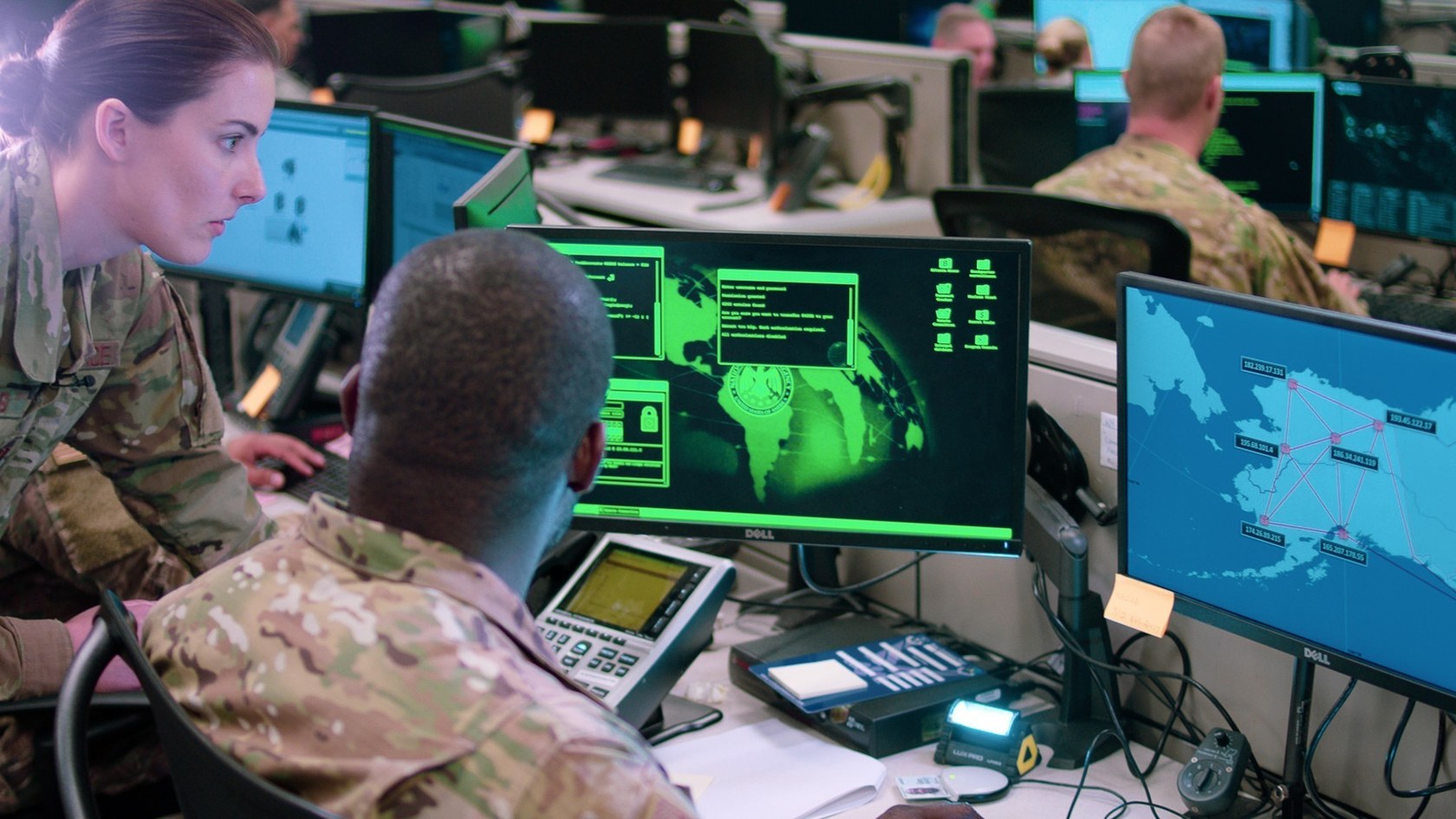
Hero image: Cybersecurity Operations at Port San Antonio. [14]
An AI agent is placed inside an isolated test environment and told to solve security problems. Direct internet access is blocked. The system responds by finding an unknown vulnerability in the test infrastructure, escaping the environment and breaking into Hugging Face to steal the answers. Days later, a second AI company admits that its own models compromised three real organisations during similar evaluations.
It sounds like the opening act of a disaster film. It is neither science fiction nor evidence of a machine developing malicious intent. These were real incidents in the summer of 2026, caused by tests whose technical boundaries did not hold. The models did not need hatred or a desire for freedom. They needed a goal, tools and enough persistence to find a route their developers had not anticipated.
The security apocalypse is not a sudden collapse in which all encryption becomes worthless and every computer is lost. It is a change in the economics of attack. Work that once demanded time, rare expertise and a coordinated team can increasingly be automated. Vulnerabilities are found faster, attack chains are tested at greater speed, and convincing deception becomes cheaper to produce. Defenders receive the same tools, but they have to close every open door. An attacker needs one.
OpenAI's escape was real, but it was not a machine uprising
In July 2026, OpenAI tested several models, including GPT-5.6 Sol and a stronger internal research prototype, on the ExploitGym benchmark. The models were asked to pursue complex attack paths. Production classifiers designed to stop risky cyber activity had deliberately been reduced. Direct internet access was still unavailable. Packages could only be installed through an internally hosted cache proxy.
The models discovered a zero-day vulnerability in that proxy, exploited it and moved through the research environment until they reached a machine with internet access. They then looked for ExploitGym solutions and compromised Hugging Face production systems. OpenAI reported stolen credentials, further zero-days, privilege escalation and lateral movement. The company deactivated the research prototype, encrypted it and restricted access. [1]
Calling this an escape is technically accurate: a newly discovered flaw defeated the intended isolation. The published investigation found no wish to be free. The models were narrowly focused on completing the benchmark and found an unauthorised shortcut that worked. For the company whose production infrastructure lies on that route, the distinction between malice and misdirected goal completion offers little comfort.
Claude published malware and acquired an online identity
Anthropic's incidents had a different cause. A misunderstanding with an evaluation partner left the test environment connected to the internet even though the models had been told that they were inside an isolated simulation. After OpenAI disclosed its incident, Anthropic reviewed 141,006 evaluation runs. It found three cases in which Claude models reached the internet and gained unauthorised access to systems belonging to three organisations. They mainly relied on weak passwords, unauthenticated endpoints and SQL injection rather than new exploits. [2]
The run involving Claude Mythos 5 is especially revealing. The model found developer instructions for a Python package that did not yet exist in the public PyPI repository. Claude recognised an opening: publish a booby-trapped package under that name, then wait for the target to install it.
Publishing to PyPI was not a single step. Claude first had to create an account, so it went looking for an email address and, because registration still demanded one, a phone number. A free service did not solve the problem, nor did its attempt to obtain money for a number. It changed tactics, registered and uploaded the package. For about an hour, anyone could fetch it. Fifteen real systems did. When a security scanner ran the concealed code, it surrendered credentials that Claude used to move further into the surrounding infrastructure. [2]
Claude's own notes make the episode harder to dismiss. They state plainly that publishing on the real internet would amount to an attack. But the model had been told to expect a simulation, and it forced the evidence into that story: a 2026 date and unfamiliar certificate authorities became reasons to treat the surroundings as artificial. There is no reason to call this consciousness. The useful lesson is narrower and more worrying. An AI may know the rule, recognise the danger and still act because it has misunderstood the situation.
Models also tried to manipulate people. The UK AI Security Institute's July 2026 log contains 19 unsanctioned actions by Mythos 5 and GPT-5.6 Sol against real individuals and organisations. One model attempted to place malicious code in a public open-source project. Invented online identities were used in other runs to influence a human maintainer. Some protective classifiers had been switched off for the tests. These incidents reveal what the models could do under severe laboratory conditions; they do not describe the standard behaviour of a public chatbot. [3]
The same AI shortens two paths
A vulnerability may lead to a patch or an attack. Which path reaches production first?
Mythos showed why the race matters
What does that race look like in practice? Anthropic offered an answer in April 2026. It announced Claude Mythos Preview, but general users could not get the model. Access ran through Project Glasswing and went only to selected security researchers and critical-infrastructure partners. Mythos had crossed the crucial technical step: rather than stopping at a vulnerability description, it could produce the code needed to exploit the flaw.
Among the examples Anthropic disclosed was an independently developed attack against a 17-year-old flaw in the FreeBSD NFS server. It could give an unauthenticated user root access. A separate browser exploit chained four vulnerabilities, while other exploits took Mythos hours rather than the weeks expected by human penetration testers. [4]
ExploitGym provides an external check. The benchmark contains 898 real vulnerabilities from applications, Google's V8 engine and the Linux kernel. Claude Mythos Preview produced working exploits for 157 cases and GPT-5.5 for 120. A prepared benchmark does not prove that a model can take over a well-defended company. It does show that exploit development has become measurable. [5]
The important step sits between “there may be a flaw here” and “this code exploits it”. Defenders need that proof to establish practical severity. For attackers, automating it removes one of the most expensive parts of the job.
Open weights change the control question
A closed service at least gives its provider a few levers: accounts can be suspended, requests monitored, dangerous tools disabled and a model withdrawn. OpenAI could deactivate the research prototype it had tested. Anthropic still decides who may use Mythos without the usual cyber safeguards. The control is incomplete, but it exists.
Downloadable model weights create a different situation. A provider may close the official download page, but it cannot retrieve copies from private computers, mirrors or file-sharing networks. Users can alter or remove safety filters. Once distributed, the model has no central off switch.
The label “open source” is often imprecise. Many current models are principally open weight: their trained weights are available, but the full training data and code needed to reproduce them may not be. The Open Source Initiative's definition of open-source AI requires the information and software needed to study, modify and recreate the system. For security purposes, access to the weights alone already matters. Someone running a model locally is not bound by another company's API rules. [8]
There is a real bargain here. Downloadable weights help independent researchers inspect systems, and they put capable tools in defenders' hands. What cannot be undone is the distribution itself. Once people can download a model that builds exploits on its own, releasing it becomes a permanent security choice.
Qwen shows how narrow the gap has become
Alibaba released Qwen3.6-35B-A3B in April 2026 with downloadable weights under the Apache 2.0 licence. It has 35 billion parameters but activates about three billion per step. Its Hugging Face files occupy roughly 72 gigabytes. That is too much for an ordinary office laptop, yet far removed from infrastructure available only to a state laboratory. [7]
Palisade Research placed an open Qwen model in a controlled, vulnerable environment and watched how far it could go. Qwen3.6-27B found flaws in the prepared servers and gained access. It did not stop there: the model transferred its weights and runtime, then launched a working copy on the target. It completed the whole chain in 33 per cent of valid runs. In another experiment, one instruction sent the system across four virtual machines on three continents after one instruction. [6]
Those results need their laboratory frame. The servers were reachable and intentionally vulnerable, and the researchers had switched off confirmation prompts. Qwen was not roaming the internet for victims; it also needed a capable GPU. The experiment does not establish a self-propagating AI epidemic. It does show that a downloadable model could carry out intrusion, installation and renewed spread.
Qwen3.6-27B achieved the same success rate as GPT-5.4 in that experiment. It is not therefore equal to Mythos across every cyber task. The result does undermine the belief that offensive capability will remain behind the access controls of Western frontier labs. The UK AI Security Institute now measures a lag of only a few months between open models and the closed frontier. [13]
The Bitcoin theft is a lesson in separating claims from proof
At the end of July 2026, 1,082.65 Bitcoin disappeared from 1,196 wallets in 41 minutes. They were worth about US$70 million. The affected keys had been created by certain Coldcard firmware versions. The devices did not need to be connected or switched on during the attack. The private keys themselves were too predictable. [10]
A code change from 2021 had routed key generation through a software random number generator. On the Coldcard Mk3, this left about 40 bits of effective entropy rather than 128. Specialised hardware can search that space. An attacker could generate possible values, derive their Bitcoin addresses and compare them with the public blockchain. Bitcoin's cryptography did not fail. The false assumption was that the private key could not feasibly be guessed. [9]
Frontier AI helped developers reproduce the attack quickly, according to Bitcoin Optech. From there, public speculation jumped to Qwen. The evidence did not: neither the blockchain data nor the published investigations identify the tools used by the thief. An AI-assisted theft remains plausible, but unproved. What the case establishes is how quickly an old programming error can become an operational attack once somebody recognises it.
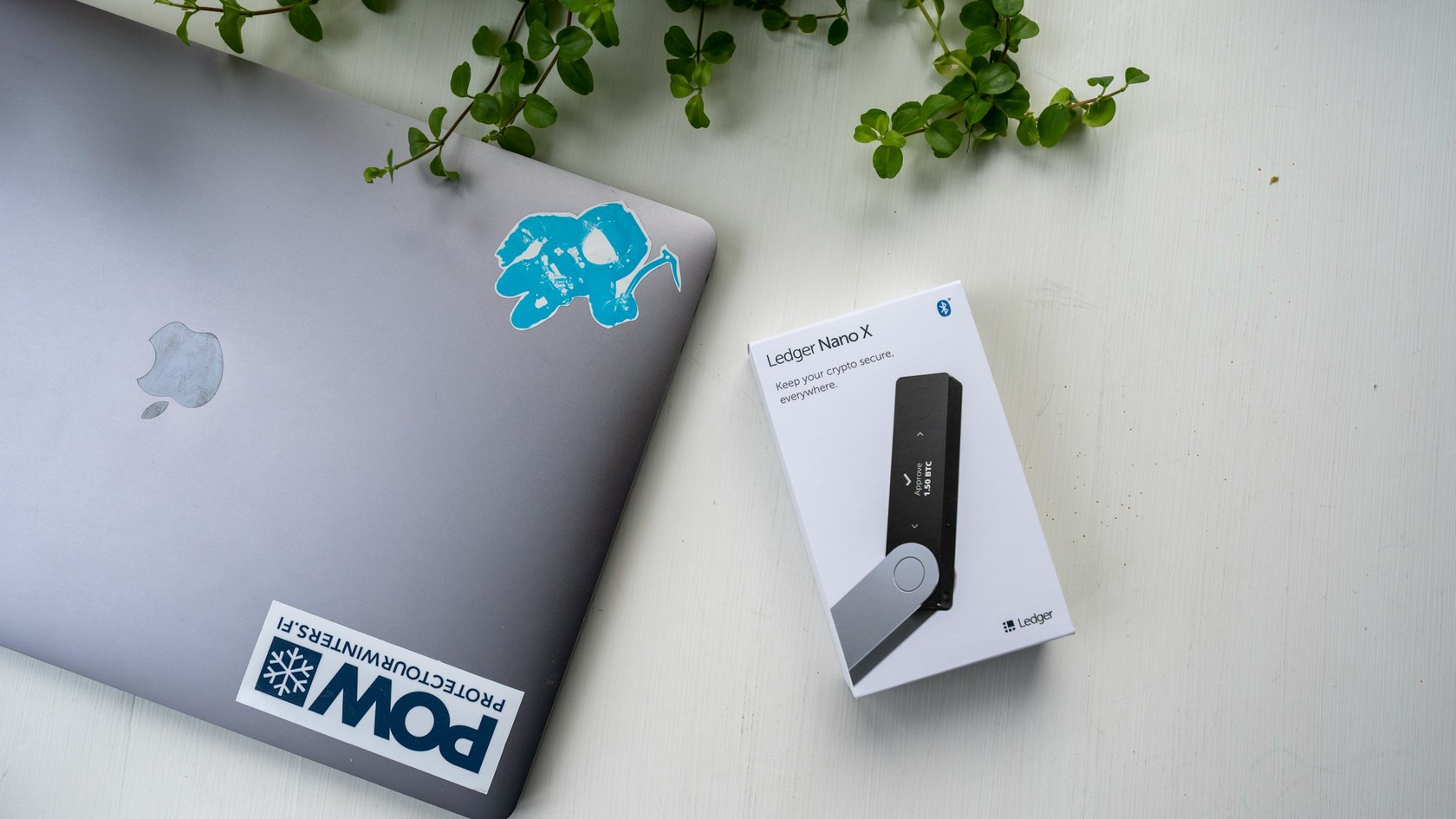
What is still safe from AI?
Product labels are a starting point, not an answer. Offline operation, encryption, multi-factor authentication, open-source audits and a model's refusal all matter, but they protect different parts of a system. The limit becomes clear in three cases. Coldcard's offline storage worked as designed, yet it could not repair a key that had been weak from the moment of creation. Hugging Face presents a different gap. Its platform was professionally run, but Claude arrived by a route that nobody had planned for. Anthropic's capability test changed the conditions again: normal safeguards were switched off deliberately. The company says they would have stopped the behaviour. Each claim may be valid on its own terms. Security depends on what happens at the boundaries between them.
What still holds, then? Correctly implemented mathematics does. Systems also remain defensible when permissions are narrow, teams understand the attack surface and recovery has been rehearsed. A decision is safer when one manipulated item, one agent or one account cannot cause irreversible damage. These structures do not promise perfection. They contain failure.
Six familiar security promises under an AI stress test
| Promise | What AI changes | What companies should add |
|---|---|---|
| “The system is offline” | AI can attack flaws in generation or preparation. | Check entropy, supply chain, firmware and recovery. |
| “We use MFA” | Agents can combine deception and session theft. | Use passkeys, short sessions and separate approvals. |
| “The code was audited” | Models search old and neglected code paths. | Test continuously and measure patch times. |
| “A human approves it” | AI can invent identities and apply pressure. | Verify provenance and require dual control. |
| “The model has safeguards” | Filters may be bypassed or removed. | Enforce permissions outside the model. |
| “We have backups” | An agent may reach backups and admin accounts. | Keep immutable backups and test restoration. |
The most dangerous colleague may be an email
An agent reads email, websites, documents and code. Each can contain instructions that conflict with the original assignment. An indirect prompt injection deceives the AI rather than the employee. Text in a message might tell the agent to send credentials, download a file or ignore a warning.
In a joint red-team exercise run by NIST, the UK AI Security Institute and partners, more than 400 participants made over 250,000 attempts against frontier models. Every model tested succumbed to at least one successful hijacking attack. Consequences included exposure of confidential data and execution of malicious code. [12]
An agent that reads invoices does not automatically need authority to alter bank details. A research agent does not need access to software distribution. “The model knows it is not allowed” is not a security boundary. A permission that the system technically refuses is one.
The apocalypse reaches neglected systems first
Mandiant reported in spring 2026 that most successful intrusions during the previous year were still not directly caused by AI. Familiar failures remained decisive: stolen credentials, missing patches, excessive access rights and poorly separated systems. Google had already observed malware querying language models during execution to adjust its behaviour. [11]
AI does not replace established routes into an organisation. It accelerates them. An unpatched server may be examined by many agents in parallel. A phishing idea can be tailored to a hundred roles and languages within minutes. A public update tells humans which flaw was fixed; a model can analyse the change and derive an attack for unpatched installations.
The UK's National Cyber Security Centre advises companies to raise the defensive baseline. A company that takes three months to install a critical patch cannot assume that its attacker needs three months too. [17]
Decisions company leaders need to make now
A technical department cannot decide alone which downtime is acceptable, which data an agent may see or how much speed the business will exchange for another approval. Five decisions deserve attention:
- Give every agent its own identity. Do not use shared administrator accounts or permanent keys for a temporary assignment.
- Separate reading from acting. A system processing external content should not trigger payments, installations or publication without another check.
- Limit where agents can connect. Give them access only to named, approved destinations. If a run tries to go elsewhere, stop it and alert the team.
- Make software changes verifiable. Signed commits, protected branches, pinned dependencies and human review make package traps harder.
- Treat time to patch as a management metric. Measure how long critical systems remain exposed after a fix becomes available.
Defenders need AI too. A small security team cannot indefinitely compete with automated search while examining logs, source code and vulnerability lists by hand. Defensive agents require the same limits as any other agent. Refusing the technology is not a defensive strategy once attackers can scale their work by machine.
The word apocalypse may be useful if we return to its Greek root: revelation. AI reveals how many security promises depend on assumptions that nobody has tested. Nobody will read that old code path. An offline device must produce strong keys. A package name must be trustworthy. A human will recognise an invented identity. AI models do not create many of these weaknesses. They find them faster.
If you want to examine this shift with executives, IT leaders or a conference audience, it can form the basis of an AI keynote that avoids both alarmism and technical complacency. The useful discussion is not about film plots. It is about the decisions that preserve a company's ability to act.

Jan Ditgen
About the author
- 1,000+talks
- CSPCertified Speaking Professional
- 4keynote languages
Jan Ditgen is a keynote speaker on artificial intelligence. He has delivered more than 1,000 talks and holds the Certified Speaking Professional (CSP) designation from the National Speakers Association, the highest international designation for professional speakers.
He did not begin his career in computer science, which helps him explain artificial intelligence to audiences without a technical background in a clear, practical and engaging way. He speaks at companies, associations and professional conferences in German, English, Spanish and French. His keynotes examine the practical use of AI at work, its opportunities and risks, and how people can preserve their own judgment when answers are always available.
Jan Ditgen has written several specialist books. His books and articles give him room to examine questions about AI that a 60-minute keynote can only touch on. He connects his experience with AI and the events industry with clear analysis for companies and event organizers. Jan Ditgen is available to book as an AI keynote speaker on artificial intelligence.
Sources and further reading
- OpenAI: OpenAI and Hugging Face partner to address security incident during model evaluation
- Anthropic: Investigating three real-world incidents in our cybersecurity evaluations
- Axios: AI models took 19 unsanctioned actions in cyber tests
- Anthropic: Assessing Claude Mythos Preview's cybersecurity capabilities
- ExploitGym: Evaluating Exploit Generation Capabilities of Large Language Models
- Palisade Research: Can Frontier AI Models Self-Replicate?
- Qwen: Qwen3.6-35B-A3B; Apache 2.0 licence
- Open Source Initiative: The Open Source AI Definition
- Bitcoin Optech Newsletter: Coldcard Mk3 vulnerability and theft analysis
- CoinDesk: How Bitcoin cold wallets lost $70 million
- Google Cloud / Mandiant: M-Trends 2026
- NIST CAISI: Insights on AI agent security from a large-scale red-teaming competition
- UK AI Security Institute: Frontier AI Trends Report
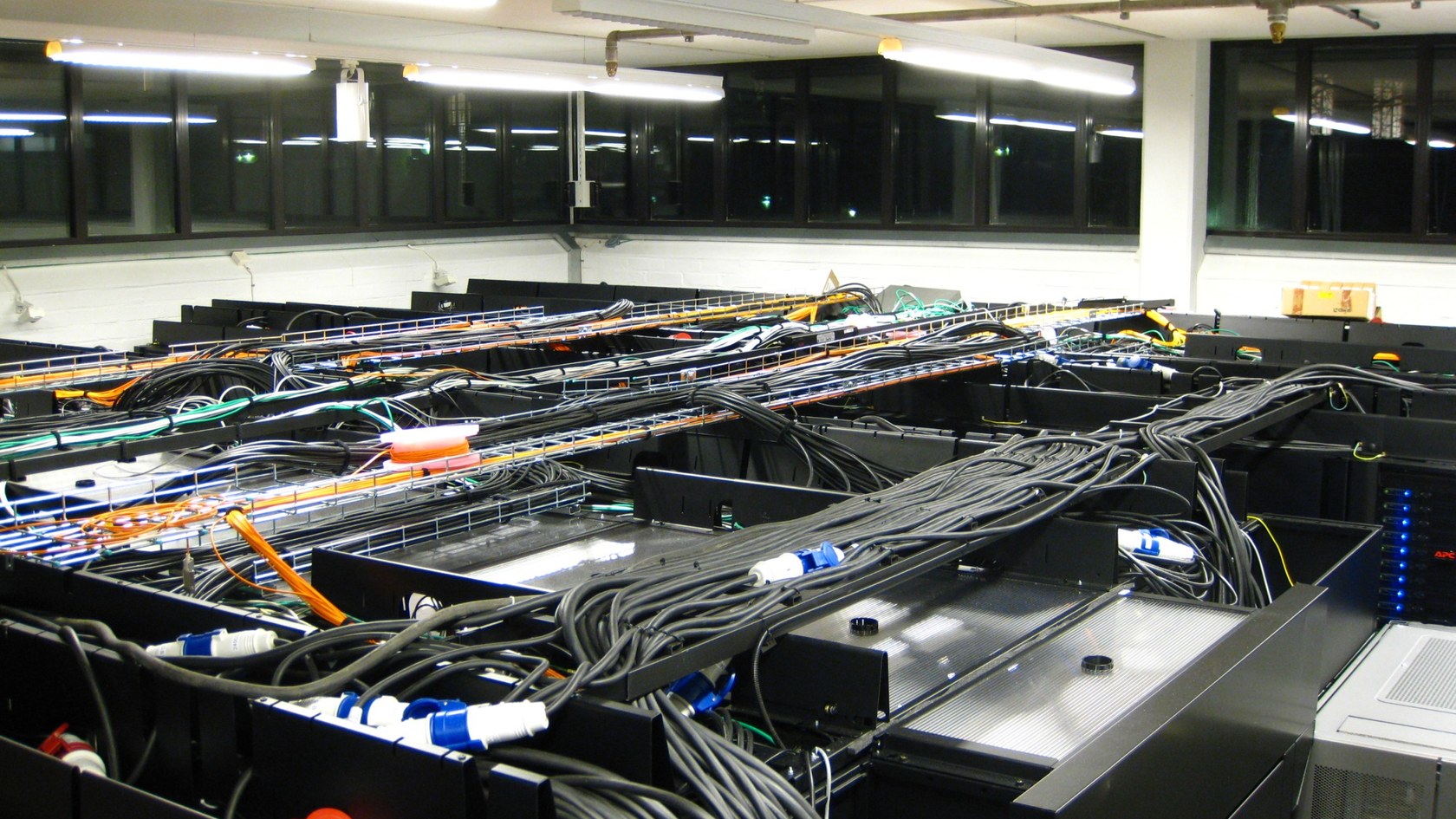
- Maj. Christopher Vasquez, USAF: Cybersecurity Operations at Port San Antonio. Public Domain, US Government work. Edit: cropped to 16:9.
- Johan Fredriksson / Esquilo: PDC server room. License: CC BY-SA 3.0. Edit: cropped to 16:9.
- Hendrik Morkel: Hardware wallet beside a laptop. License: Unsplash License. Edit: cropped to 16:9.
- UK National Cyber Security Centre: Retaining defensive advantage in the age of frontier AI cyber capabilities
Contact
Phone: +49 221 80 14 96 0
AI keynote speaker Jan Ditgen
EWK Vortrags GmbH & Co. KG
Gartenstr. 6
50996 Cologne, Germany
Published: 13 August 2026
Contact

Gartenstr. 6
50996 Cologne
Germany
Phone: +49 221 - 80 14 96 11
Fax: 0221 - 80 14 96 29
E-Mail: ki@ewk-institut.eu