20 distinctive venues for keynote speakers in Frankfurt
Concert halls, museums, industrial spaces and skyline views: a selection for events where the stage should feel considered without competing with the talk.
The room speaks before the keynote begins
I am Jan Ditgen, a keynote speaker who has worked in many different event spaces. I have spoken at almost every venue in this selection. Some stayed with me because the room brought the audience close, the production supported the talk exceptionally well, or the setting gave the programme a character of its own. These are the Frankfurt highlights I would recommend considering.
An unusual venue can give an event a clear identity, but a striking backdrop is never enough. I need a room to provide intelligible sound, clean sightlines, controlled lighting and dependable presentation technology. Stage access, backstage space and time for a proper technical rehearsal matter as well. Architecture may be memorable. It should never become such a spectacle that the audience remembers the room and loses the substance of the event.
The best event venues know when to recede. They give the audience and speaker a distinctive setting without demanding attention throughout the programme. Frankfurt is often reduced to its trade fair, airport and large hotels. The city also has concert halls, former factories, museums, academies, a stadium and smaller cultural institutions where atmosphere and professional event conditions can work together.
The twenty venues below are available for hire or may host external events by individual arrangement. This is not a ranking. A hall for 2,000 people is not better than a room for 80. It answers a different brief.
Before booking: Confirm sightlines, stage height, sound reinforcement, presentation format, rear projection, lighting at the lectern, backstage space and rehearsal time. Museums and cultural institutions may also impose opening-hour restrictions, approved technical or catering suppliers, and rules about the subjects or organisations they host.
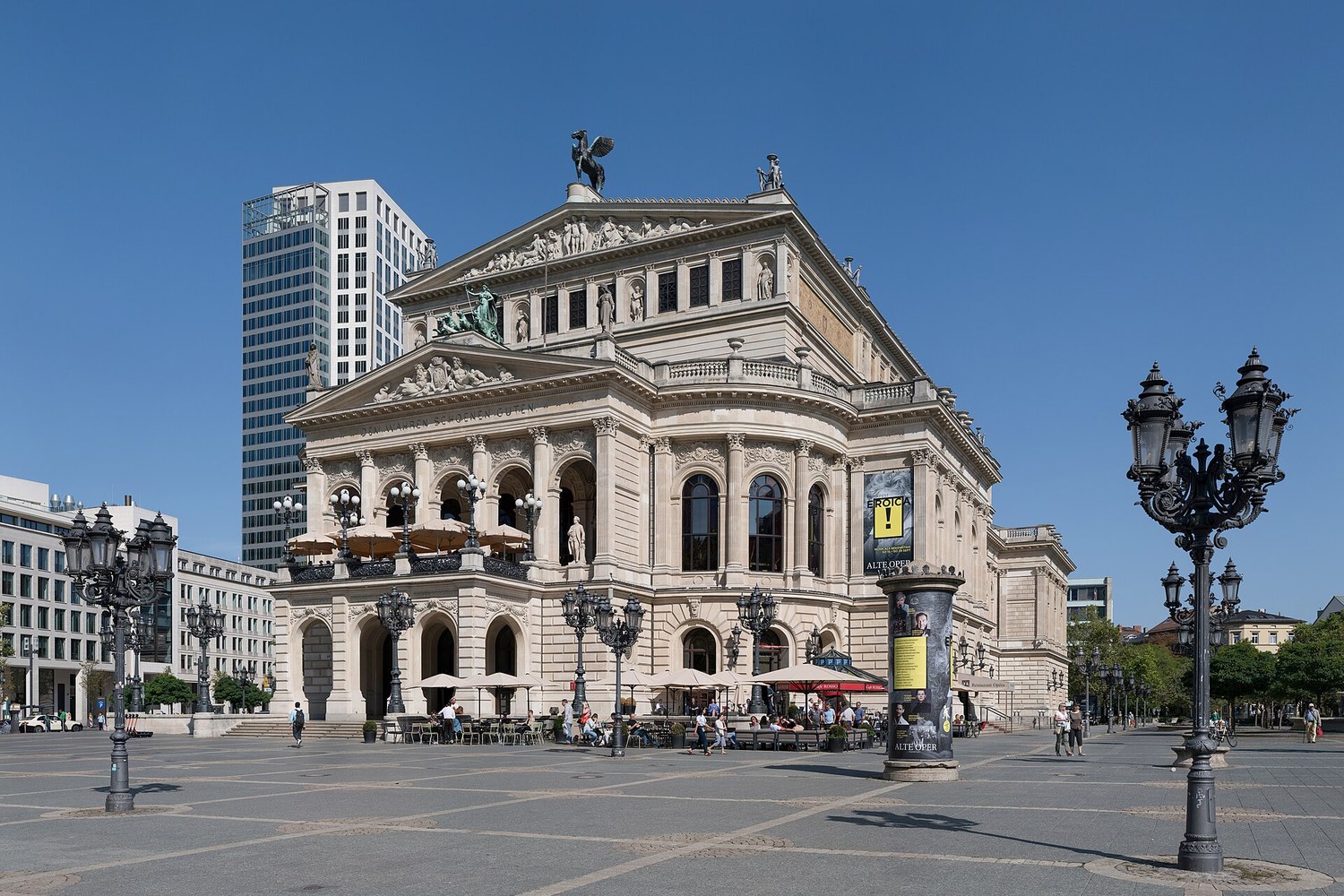
The historic façade of the Alte Oper on Opernplatz.1
Location 01
Alte Oper Frankfurt
Best suited to: conferences, award ceremonies and large corporate events
Alte Oper combines one of Frankfurt's best-known façades with a concert and conference house built for professional productions. The Grosser Saal seats more than 2,400 people in theatre style, while the Mozart Saal holds about 700. Salons and foyers add space for receptions, exhibitions and smaller discussions.
The theatre layout is a major advantage for a keynote. Stage, balconies, lighting and sound all direct attention towards one speaker. That scale still needs careful production. A solo presenter can look very small in the main hall unless set design, cameras and lighting are planned together. For a formal event with a large audience, Alte Oper gives the occasion real weight.
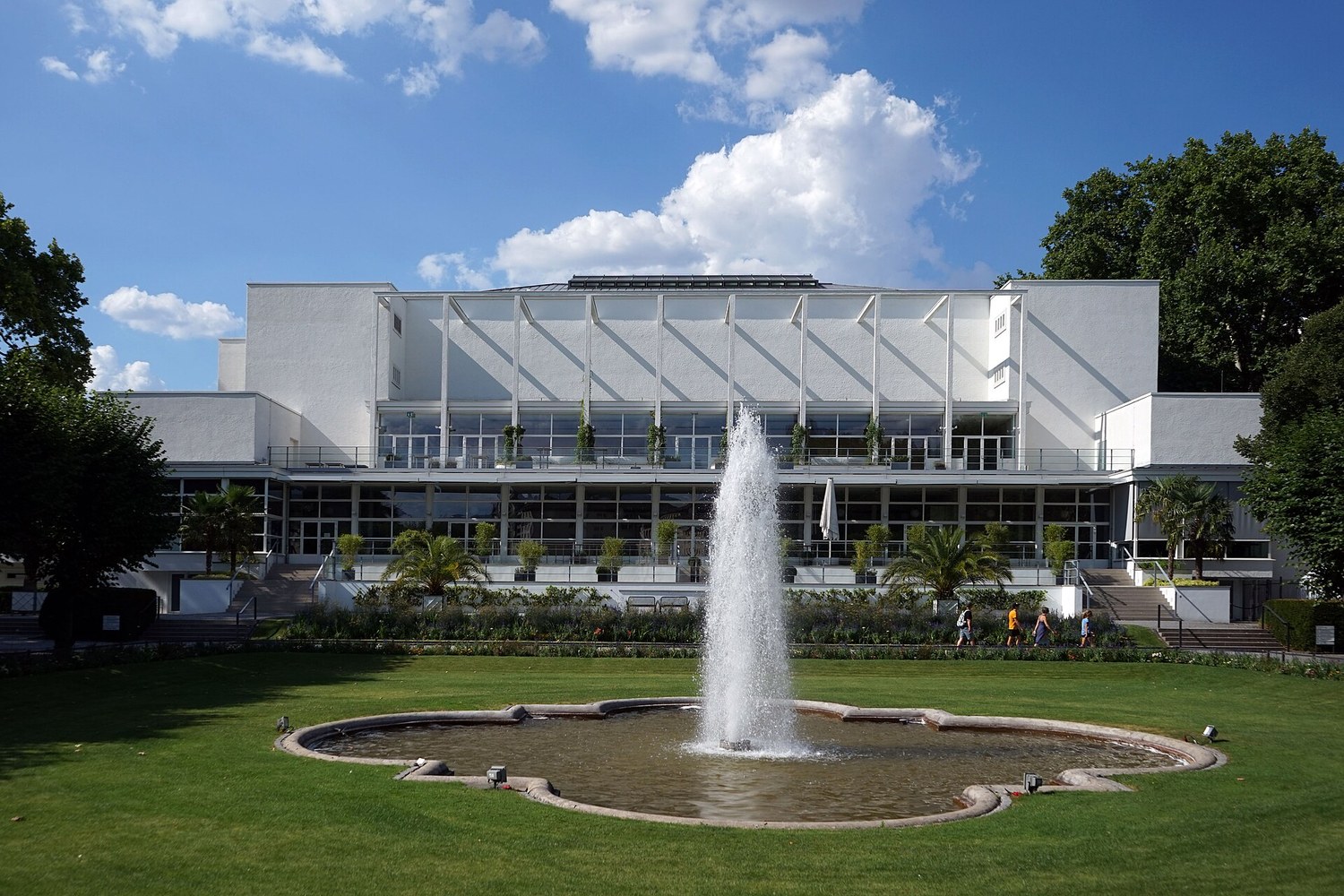
Gesellschaftshaus stands within Frankfurt's Palmengarten.2
Location 02
Gesellschaftshaus Palmengarten
Best suited to: conferences with a gala, association events and formal evening programmes
Gesellschaftshaus places a ballroom, smaller rooms, foyers and terraces inside the green setting of Palmengarten. The operator accommodates formats for up to 2,000 people. It works particularly well when a keynote belongs to a wider conference programme with a reception, dinner or summer gathering.
The gardens change the rhythm of the day. After a concentrated session, guests can step outside without leaving the event. The classical ballroom needs a different visual approach from a black-box venue. Restrained projection, a well-proportioned stage and lighting that serves both the architecture and the speaker work best here.
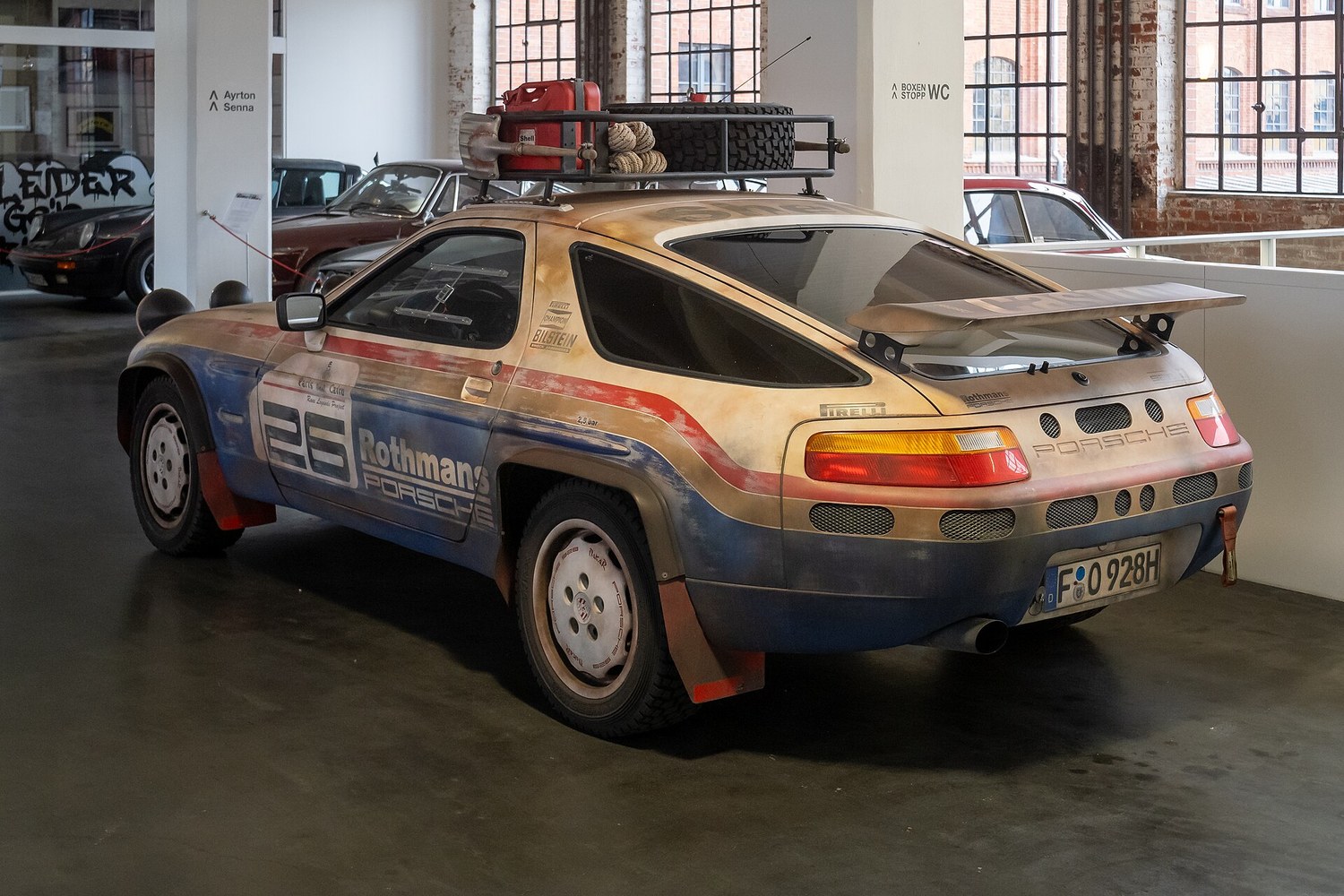
Classic cars and brick architecture define Klassikstadt.3
Location 03
Klassikstadt
Best suited to: product launches, customer events and conferences with an industrial character
A former agricultural machinery factory dating from 1910 now brings restored brickwork, glazed workshops and classic cars under one roof. Alongside meeting rooms, the complex offers a large event floor, roof terrace and courtyard. The main event space is listed for standing receptions of up to 750 guests.
The setting communicates engineering, design and craftsmanship as soon as guests arrive. That gives mobility, manufacturing and corporate-culture talks an immediate context. The cars can also compete with the stage. A clearly defined presentation area and well-planned sound are needed to turn the open display space into a focused room for 45 or 60 minutes.
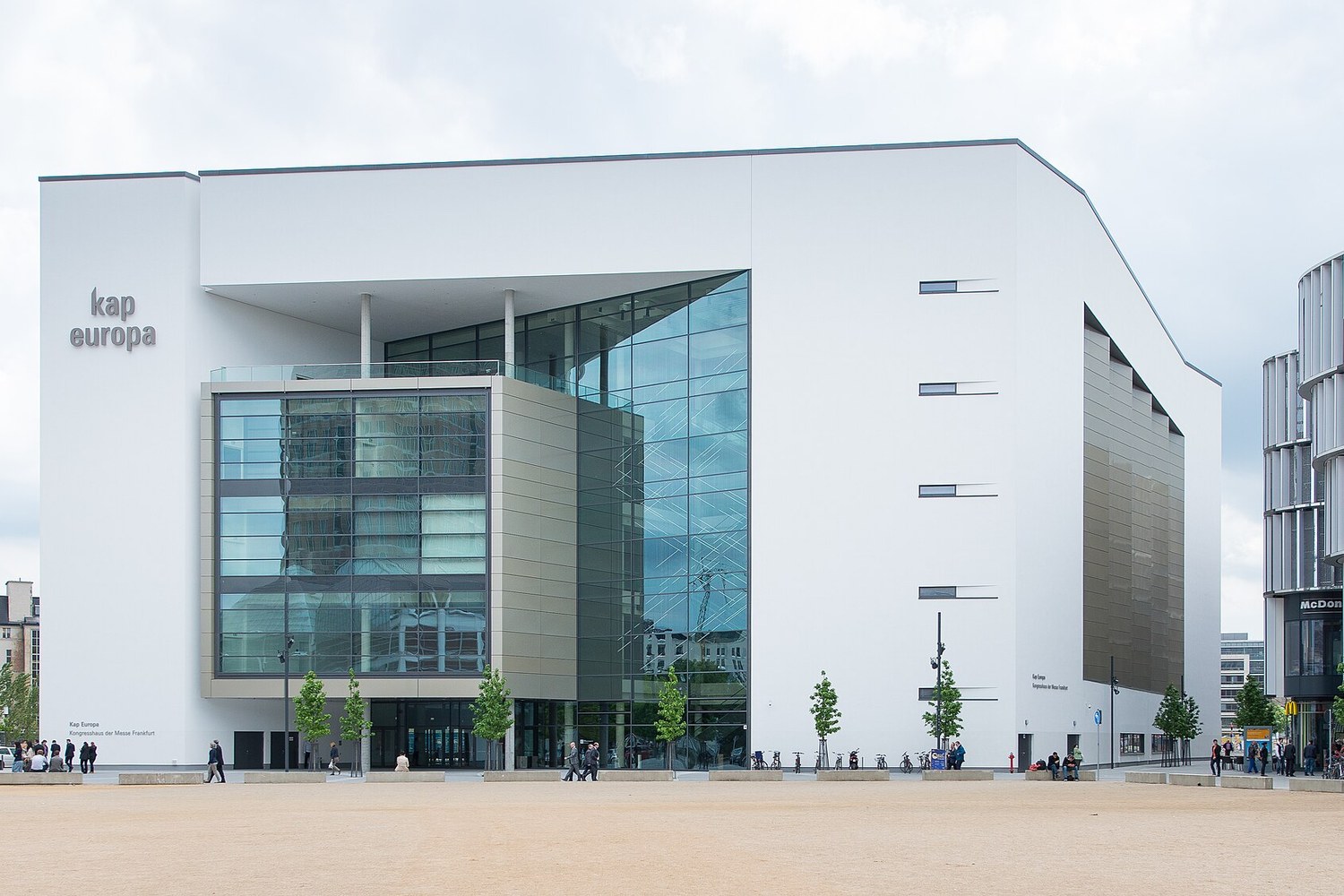
Kap Europa is one of Messe Frankfurt's dedicated congress venues.4
Location 04
Kap Europa
Best suited to: multi-track congresses, specialist conferences and events with workshops
Kap Europa is a purpose-built congress centre with four event levels. Two halls seating about 1,050 and 600 people, plus twelve meeting rooms, can accommodate a plenary programme, workshops and smaller sessions in one building. Messe Frankfurt states a total capacity of up to 2,400 guests.
The division across floors makes programme changes straightforward. An audience can gather in a large hall for the keynote, then disperse into working groups. Climate control, acoustics and daylight form part of the building's environmental design. Its location near the central station, trade fair and tram routes also helps when guests are arriving from across Germany or abroad.
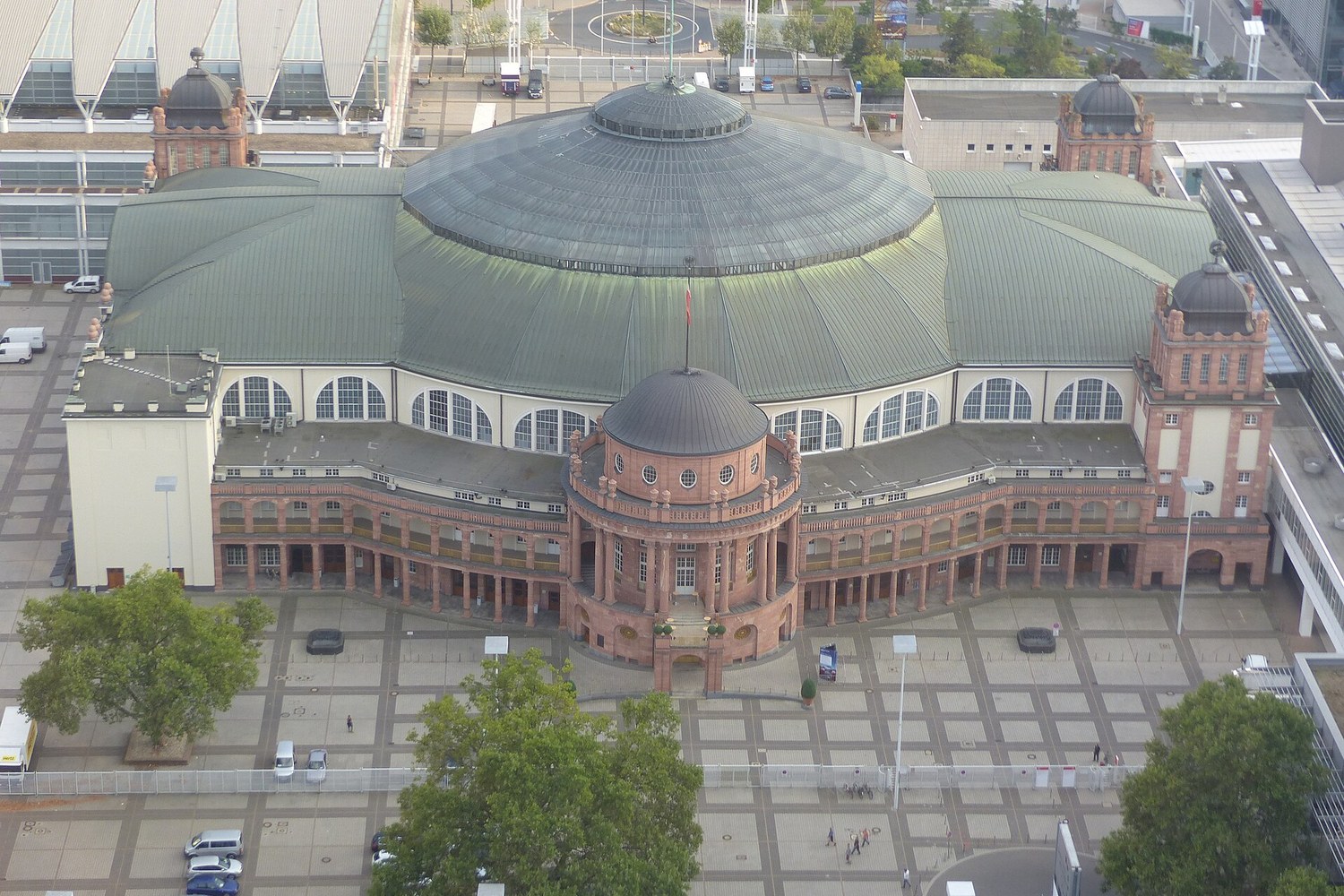
Best suited to: very large employee events, congress shows and fully staged keynotes
Festhalle is far removed from a conventional conference venue. Depending on the layout, up to 15,000 people can gather beneath its 29-metre glass dome. The hall can host congresses, product presentations, shows and exhibitions. Historic tiers and the immense height give even a large corporate event the atmosphere of an arena.
A keynote here has to be treated as a large production. Large screens, cameras, precise lighting and substantial sound reinforcement are basic requirements. With those elements in place, a talk can incorporate film, live demonstrations and staged sequences. For a conventional specialist audience of a few hundred, the hall would usually be much too large.
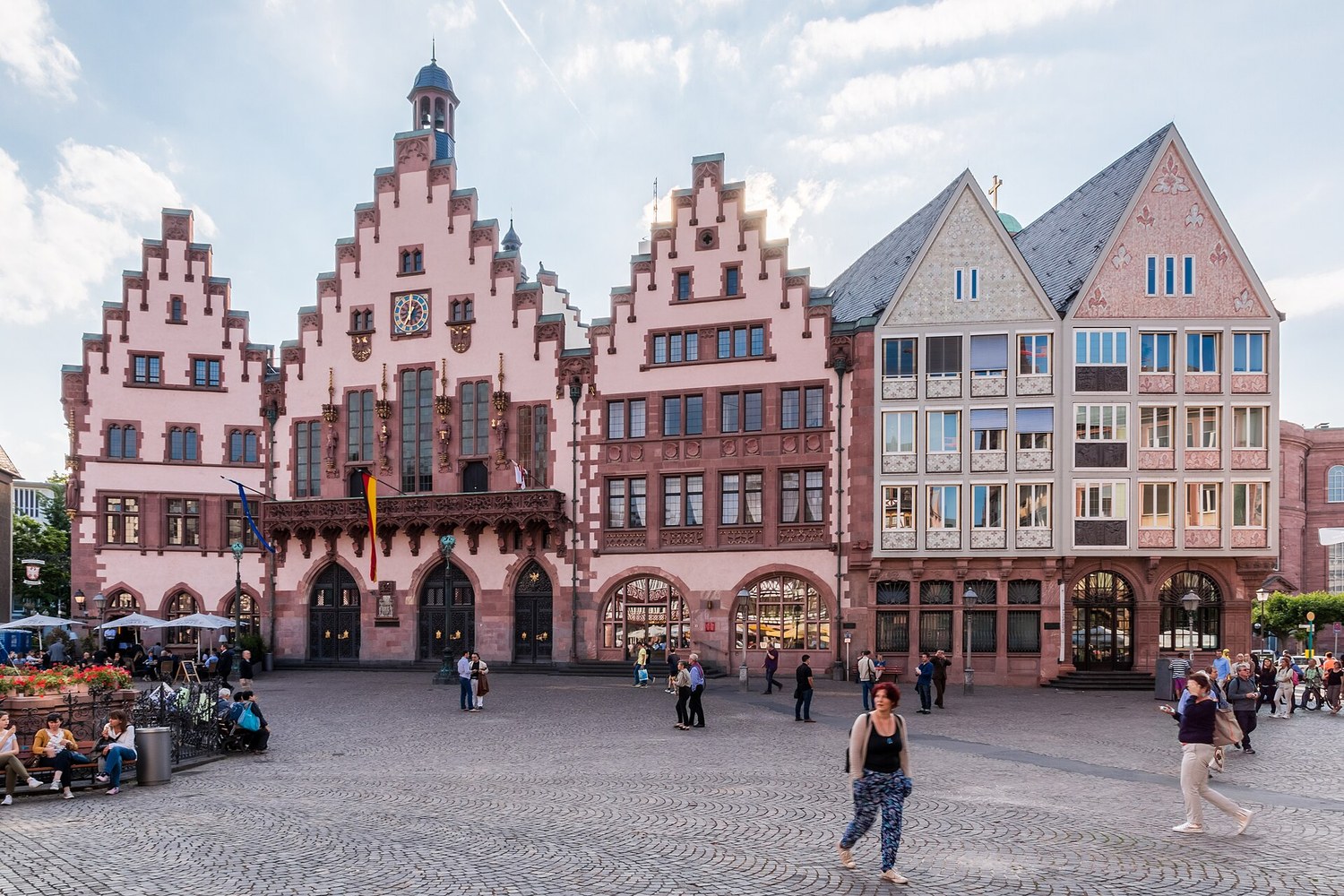
Best suited to: receptions, institutional occasions and keynotes with a strong Frankfurt connection
Selected ceremonial rooms inside the Römer can be requested for events. The late-Gothic Römerhallen and Schwanenhallen give receptions, talks and honours a setting directly connected to Frankfurt's civic history. The vaulted spaces have been restored and prepared for present-day use.
A keynote belongs here when the location carries part of the message, perhaps for a civic reception, an international delegation or an anniversary. The historic fabric limits what can be installed. Stage design, projection and cable routes need early agreement with the venue team. The Römer is not designed for show-scale production, but it can be a convincing setting for a focused talk with a political or social theme.
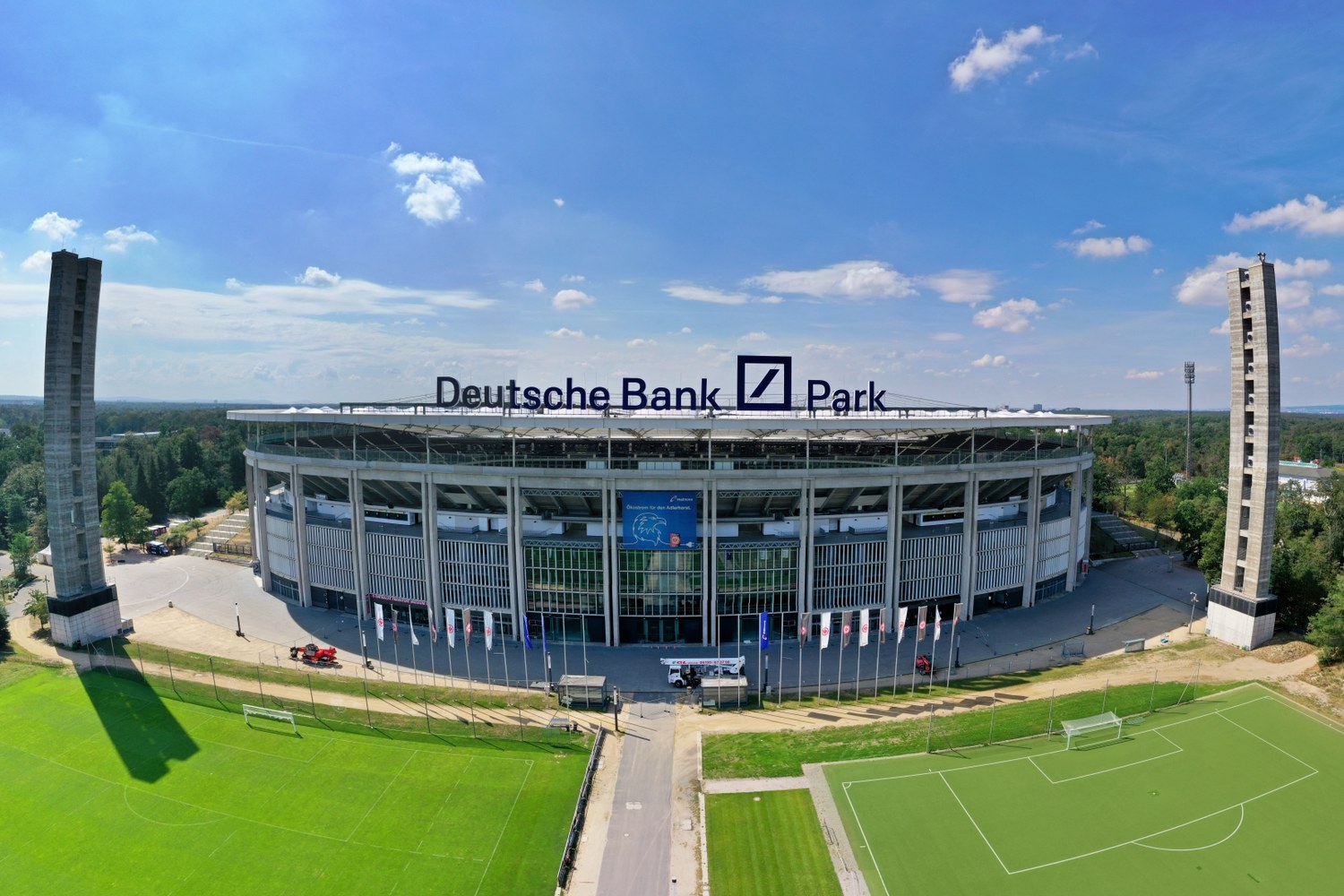
Frankfurt's stadium also operates as a business event venue.7
Location 07
Deutsche Bank Park
Best suited to: leadership meetings, large employee events and congresses with a sporting setting
Deutsche Bank Park offers substantial event facilities beyond the stadium seating. The Adler Business Club extends across five levels, with boxes, meeting rooms and spaces looking directly into the stadium bowl. A large plenary session can therefore be combined with smaller workshops in the same complex.
A stadium gives the event an emotional charge before the programme begins. Talks about team performance, leadership or organisational change gain a visible context, although the connection should go deeper than a decorative football analogy. The calendar also matters. Match days, concerts and production builds affect availability, transport and access for rehearsals.
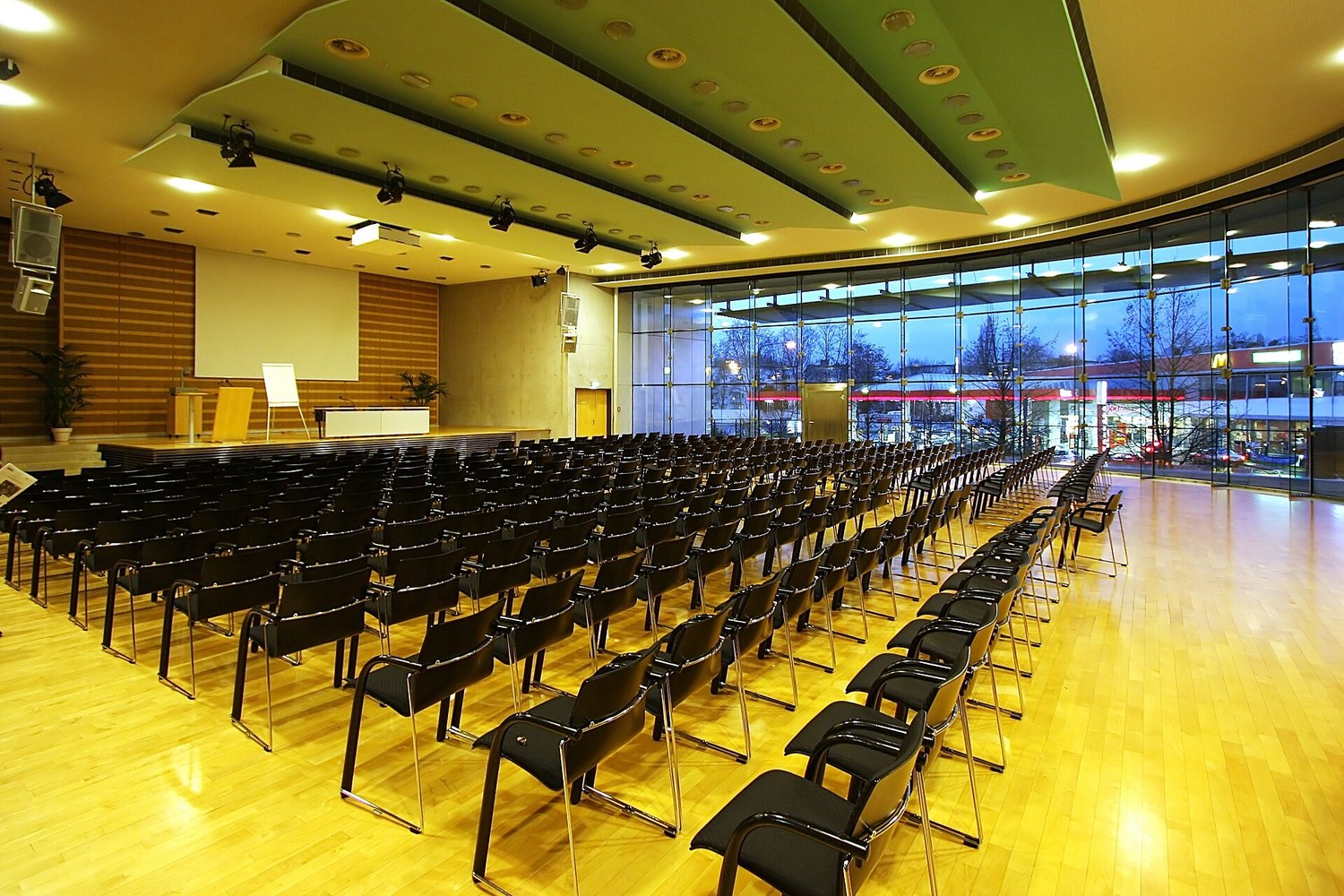
The lecture theatre is designed for conferences and readings.8
Location 08
Conference centre at the German National Library
Best suited to: specialist congresses, academic conferences and content-led keynotes
The conference centre on Adickesallee has a 325-seat lecture theatre with another 50 seats in the gallery, as well as a conference room, foyer and meeting room overlooking the skyline. A technician is included with the lecture theatre. The rooms are accessible and may be used outside normal library hours, except on Sundays and public holidays.
The library suits events where the argument and the discussion should hold the room. Its architecture is restrained, and the theatre directs attention cleanly towards the speaker and screen. A foyer reception or smaller meeting can follow close by. Academic, publishing and public-policy subjects feel at home here without acquiring the atmosphere of a trade show.
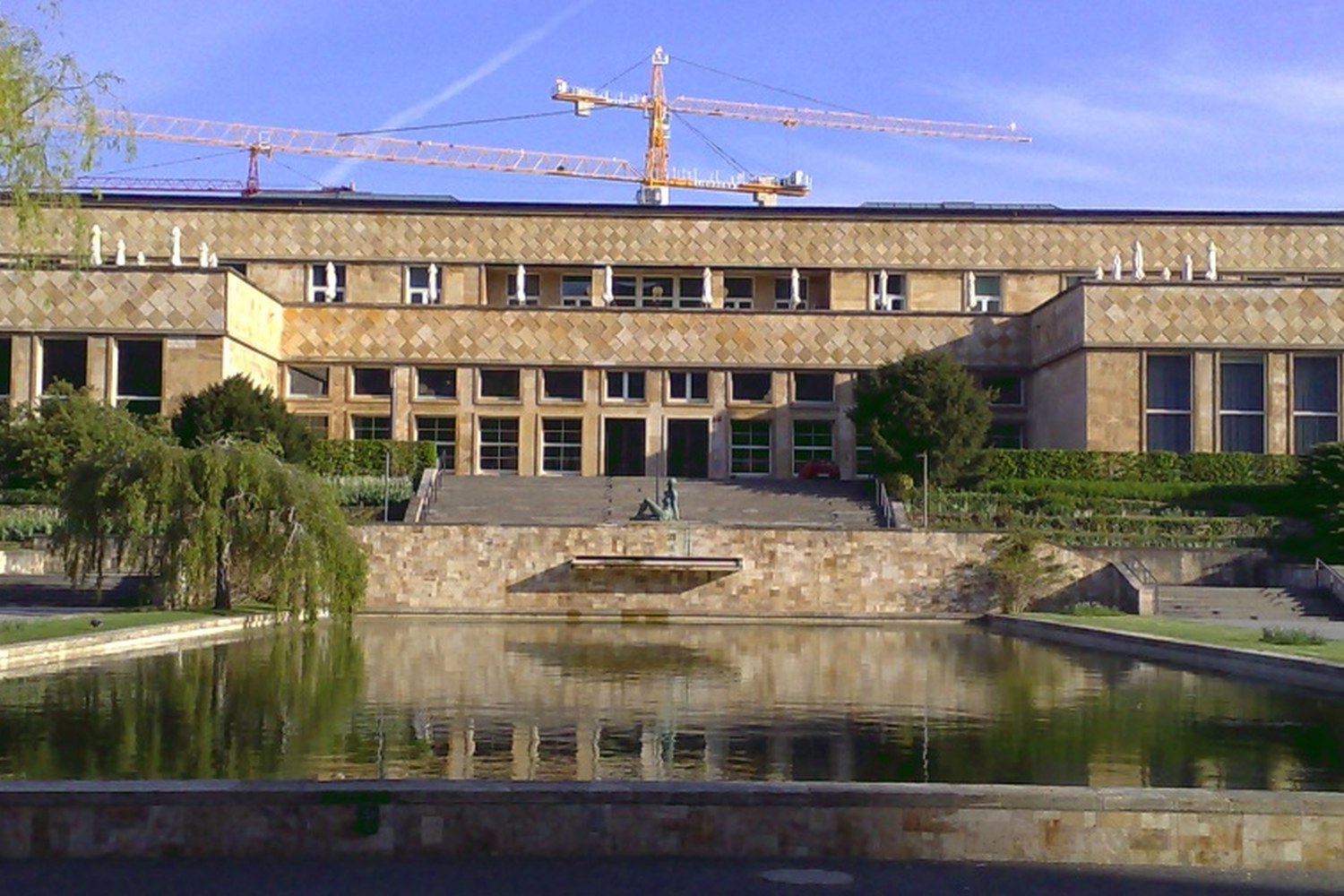
The Casino forms part of the listed ensemble at Campus Westend.9
Location 09
Casino and lecture halls at Campus Westend
Best suited to: congresses, university partnerships and events needing many breakout rooms
Goethe University makes its campuses available for external events, subject to approval of the subject and date. Campus Westend has more than 150 seminar rooms, conference rooms and lecture theatres. Distinctive options include the Casino, the rotunda inside the I.G. Farben building and the 1,200-seat Audimax.
The campus is a practical choice for congresses with many simultaneous sessions and subjects that benefit from an academic setting. The Casino has greater visual character than a standard lecture theatre, while newer buildings provide the required technical infrastructure. University life continues around the event. Semester dates, examinations, routes and access arrangements need to be checked early.
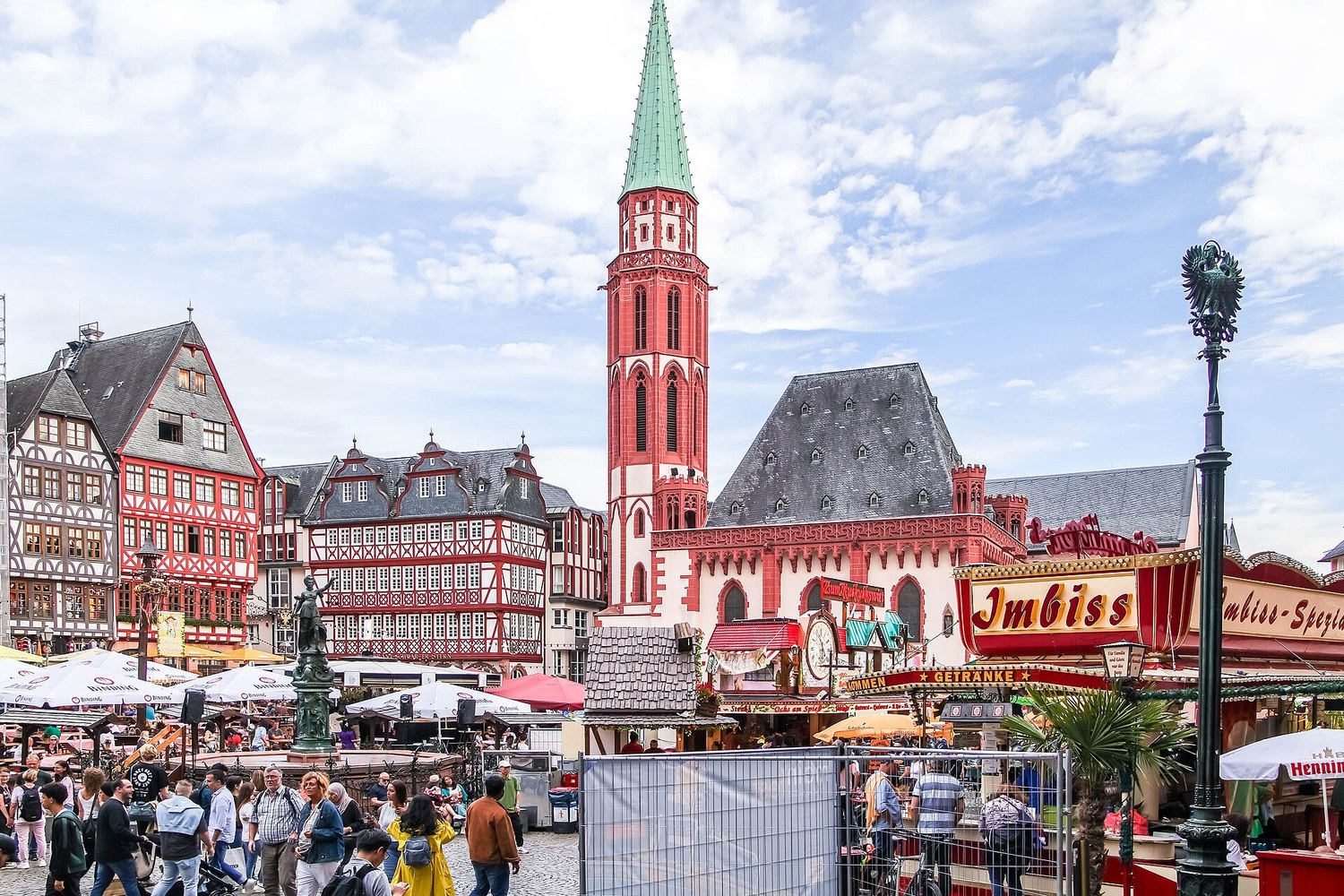
The academy stands on Römerberg; the photograph shows its Old Town setting.10
Location 10
Evangelische Akademie Frankfurt
Best suited to: dialogue events, associations and compact conferences in the Old Town
This glass-fronted conference house on Römerberg has two halls, four seminar rooms and a lounge. With the gallery included, the main hall can host events for up to 250 people. The Panoramasaal seats 80 in theatre style or holds 120 for a standing reception, with views across the Old Town and banking skyline.
This venue works well when a keynote should lead directly into discussion and working sessions. Short routes make the move from plenary to smaller rooms easy, and the operator supports streaming and remote participation. The Panoramasaal view is a considerable asset, but it can create backlight during daytime events. Check the sun position and blackout options when planning cameras, stage lighting and projection.
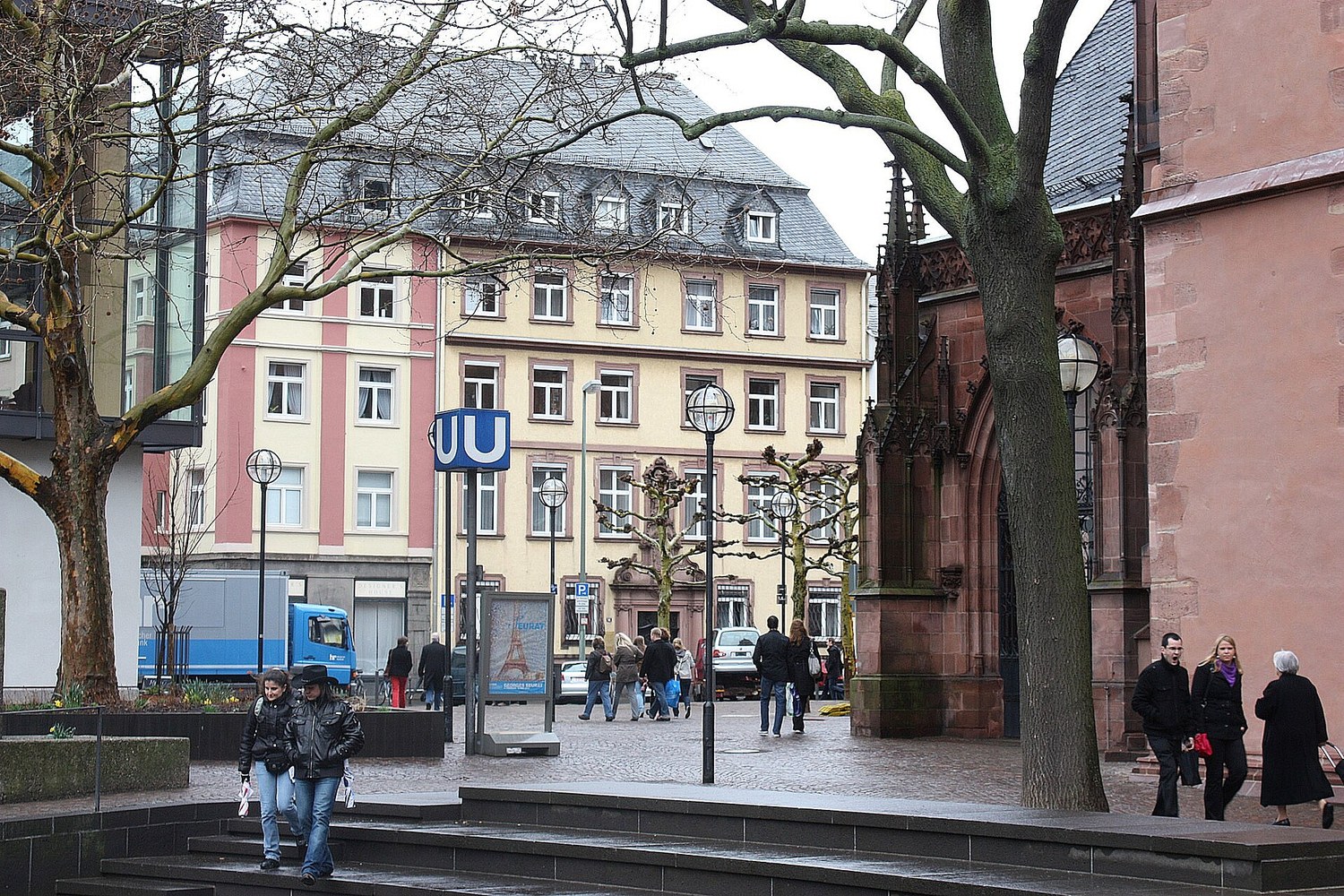
Haus am Dom stands between Frankfurt Cathedral, the Römer and the river.11
Location 11
Haus am Dom
Best suited to: conferences, customer events and hybrid talks in a central location
The Catholic education, culture and conference centre on Domplatz has seven rooms with generous daylight. The Grosser Saal and Giebelsaal are equipped for conferences, hybrid events and live streams. Smaller rooms accommodate workshops and video meetings. A roof terrace overlooking the Old Town and skyline adds another setting for the programme.
Inside, the building feels calmer than the busy streets between the cathedral and Römer. That helps with a demanding specialist programme, while receptions and breaks can still make use of the location. Parallel groups stay within short walking distance. A nearby underground station and the car park beneath the Dom-Römer quarter simplify arrival.
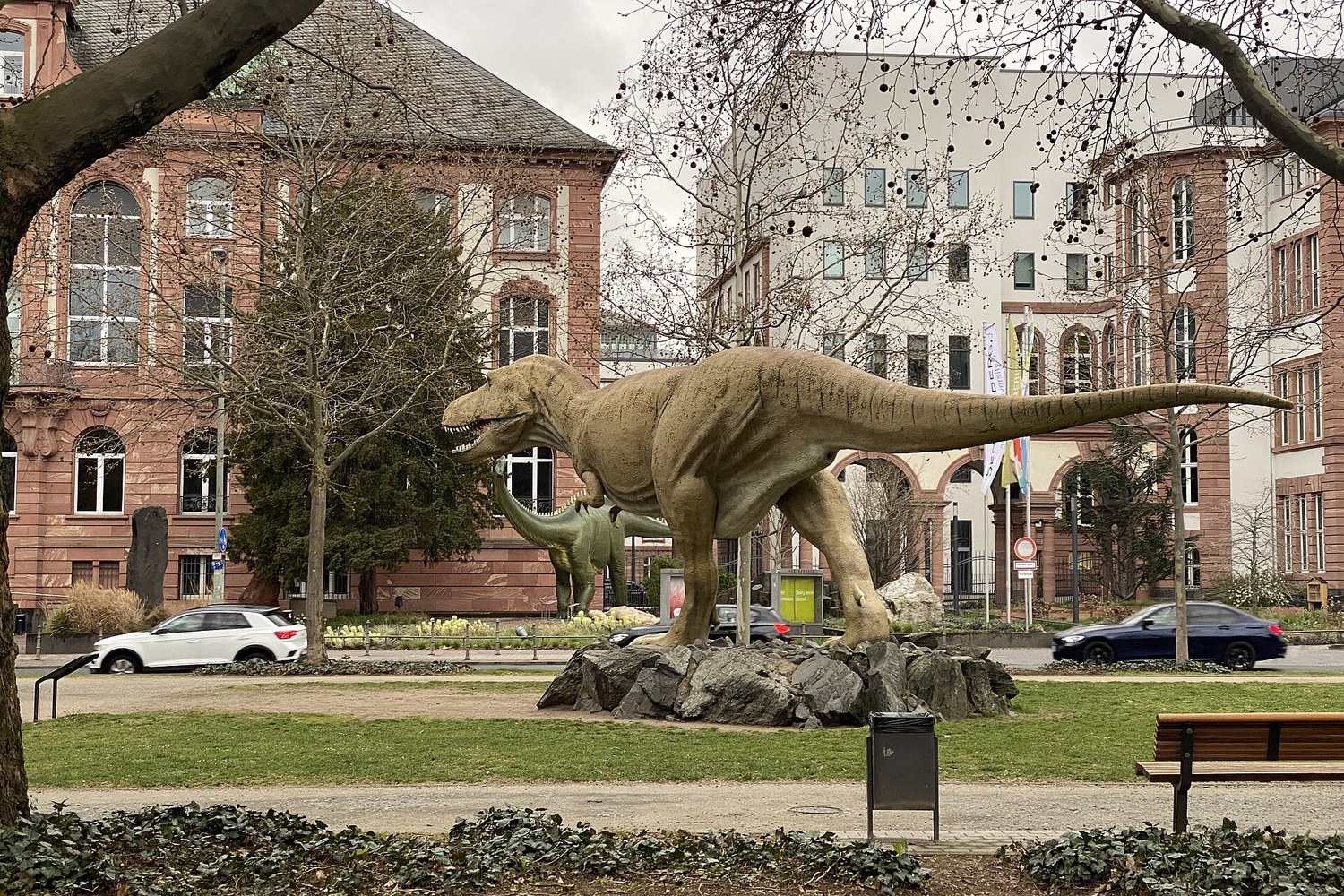
Senckenberg offers museum halls and the neighbouring Jügelhaus.12
Location 12
Senckenberg Natural History Museum and Jügelhaus
Best suited to: evening events in the museum and conferences in the historic ballroom
After public opening hours, the museum's atriums among dinosaurs, whales and mammoths become evening event spaces. Depending on the combination used, formats for 50 to 450 guests are possible. Daytime programmes can use the historic ballroom in Jügelhaus, which seats up to 250 in theatre style.
Few venues give guests such an immediate subject for conversation. Natural history and scientific research are physically present around the event. That can support talks about science, climate, technology or long-term change. There are practical limits: the museum itself is available only on selected evenings, and setup begins after public opening. For a daytime conference, the ballroom in Jügelhaus is the option to examine.
A glazed cone defines the museum building on Schaumainkai.13
Location 13
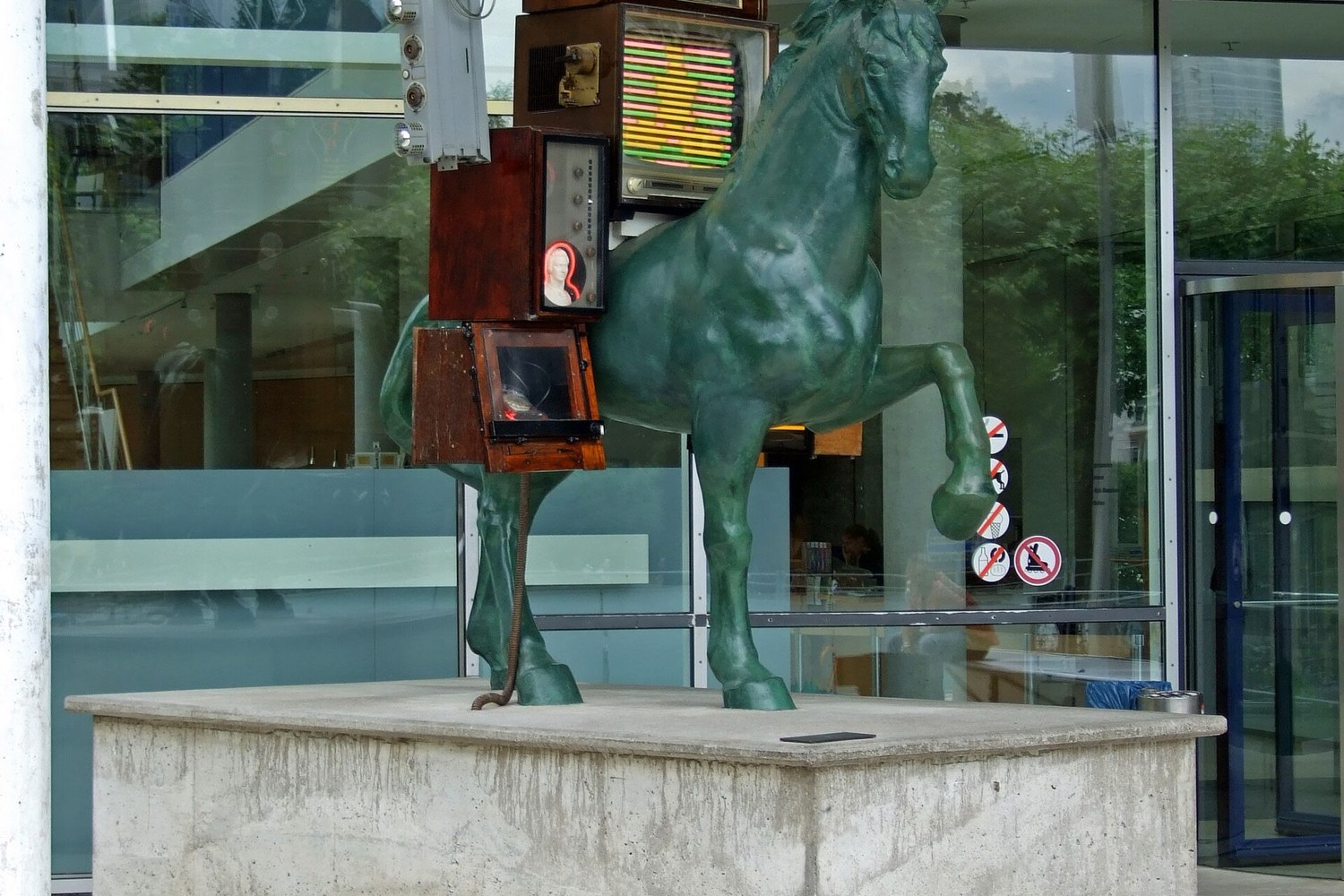
Museum for Communication Frankfurt
Best suited to: talks, press conferences and workshops related to media or communication
The museum on Schaumainkai has a circular lecture room seating up to 80 people. Seminar and group rooms can be added for workshops. Larger evening formats can use the glazed atrium at the centre of the building. Outdoor areas provide space for breaks and receptions with a view of the skyline.
The museum is a natural setting for subjects such as digitalisation, media, language and collaboration. Its collection can extend the subject of a keynote without the organiser having to build a themed environment. For daytime use, inspect the blackout options in the circular room and test how the presentation screen appears from seats at the side.
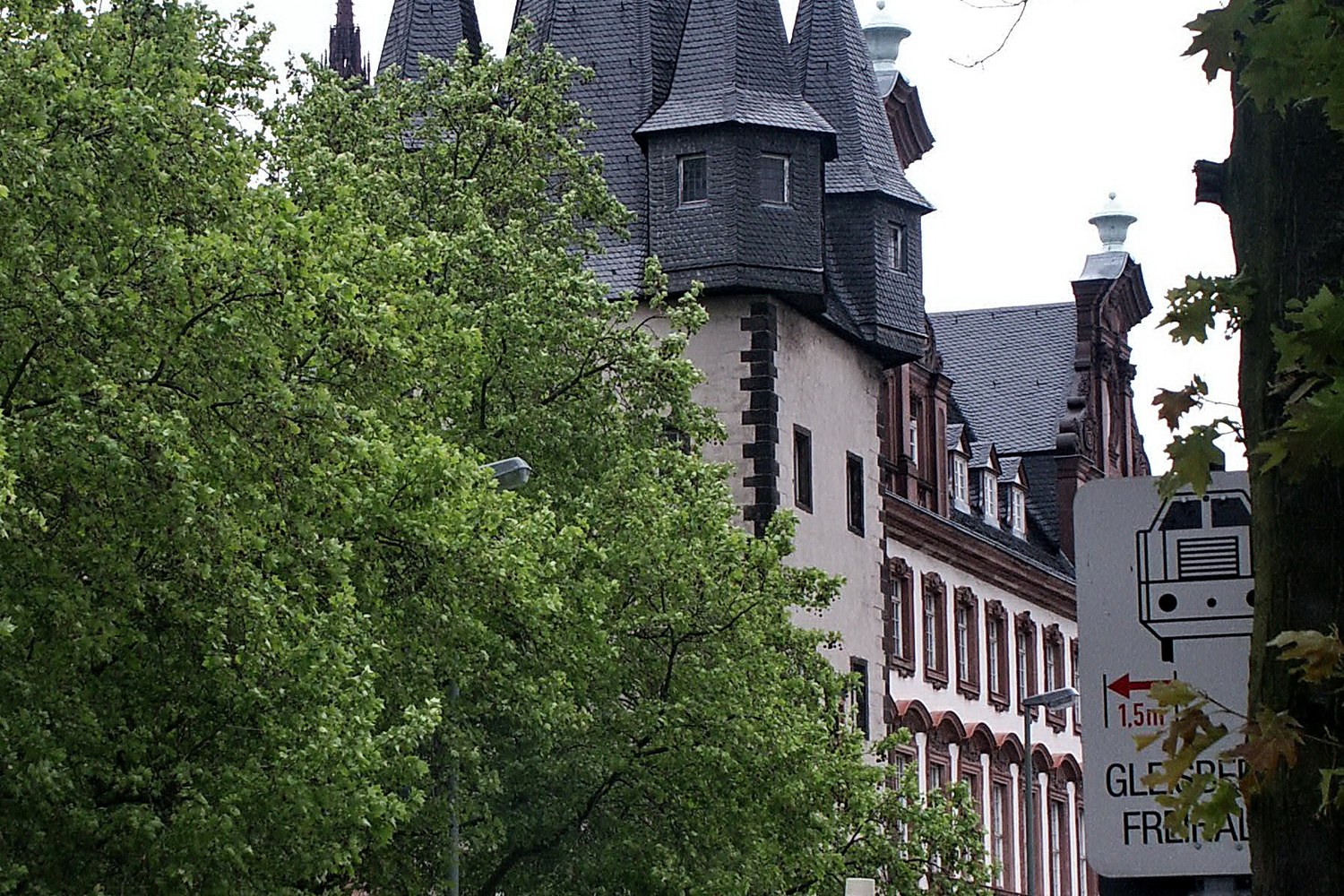
The Historical Museum stands between Römerberg and the River Main.14
Location 14
Historical Museum Frankfurt
Best suited to: talks, receptions and events concerned with the city or society
The 171-square-metre Leopold Sonnemann Hall occupies the historic Saalhof. Thirteen windows look across the Main towards Sachsenhausen. A stage, sound system, projector, retractable screen and controllable lighting are installed. The adjoining foyer can accommodate reception and catering.
The hall combines historic fabric with practical presentation equipment. It suits a keynote for a defined audience in a calm civic setting. The museum also assesses requests against its institutional principles and does not hire rooms to political parties or affiliated organisations. Those content rules should be checked at the start of planning.
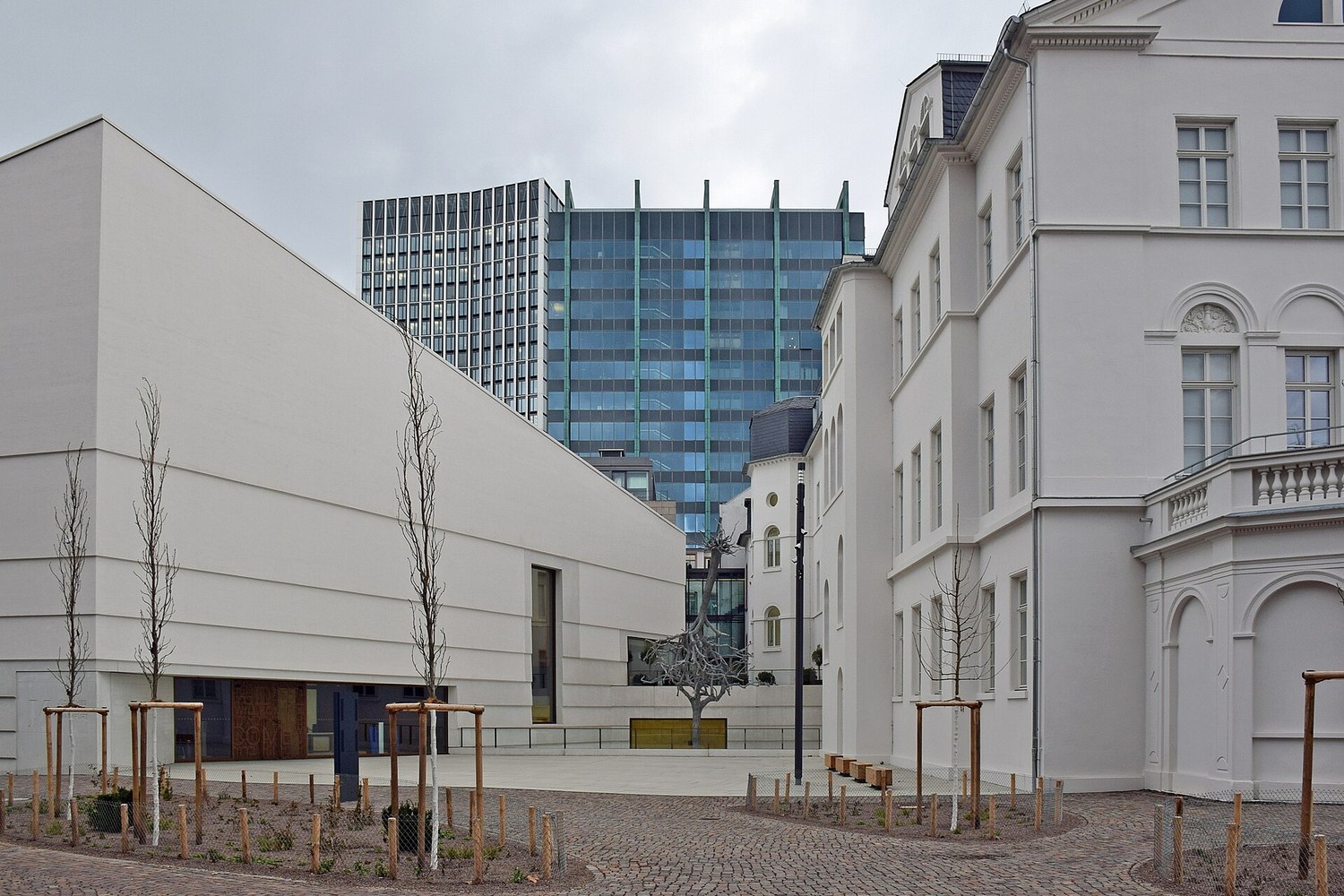
The light-filled new wing extends the historic Rothschild Palace.15
Location 15
Jewish Museum Frankfurt
Best suited to: conferences, cultural corporate events and networking formats
The new light-filled wing contains a 150-square-metre event hall with conference technology. A 200-square-metre foyer and the forecourt can host larger networking formats and gala dinners for up to 250 guests. Life Deli and its terrace suit smaller gatherings or events with a strong food element.
The contrast between the historic Rothschild Palace and the bright contemporary wing gives the venue substance. A keynote should respect the museum and its cultural purpose. Events concerned with memory, responsibility, diversity or urban history have an especially strong connection to the setting. Security, access and subject matter need agreement with the museum before invitations and production plans are finalised.
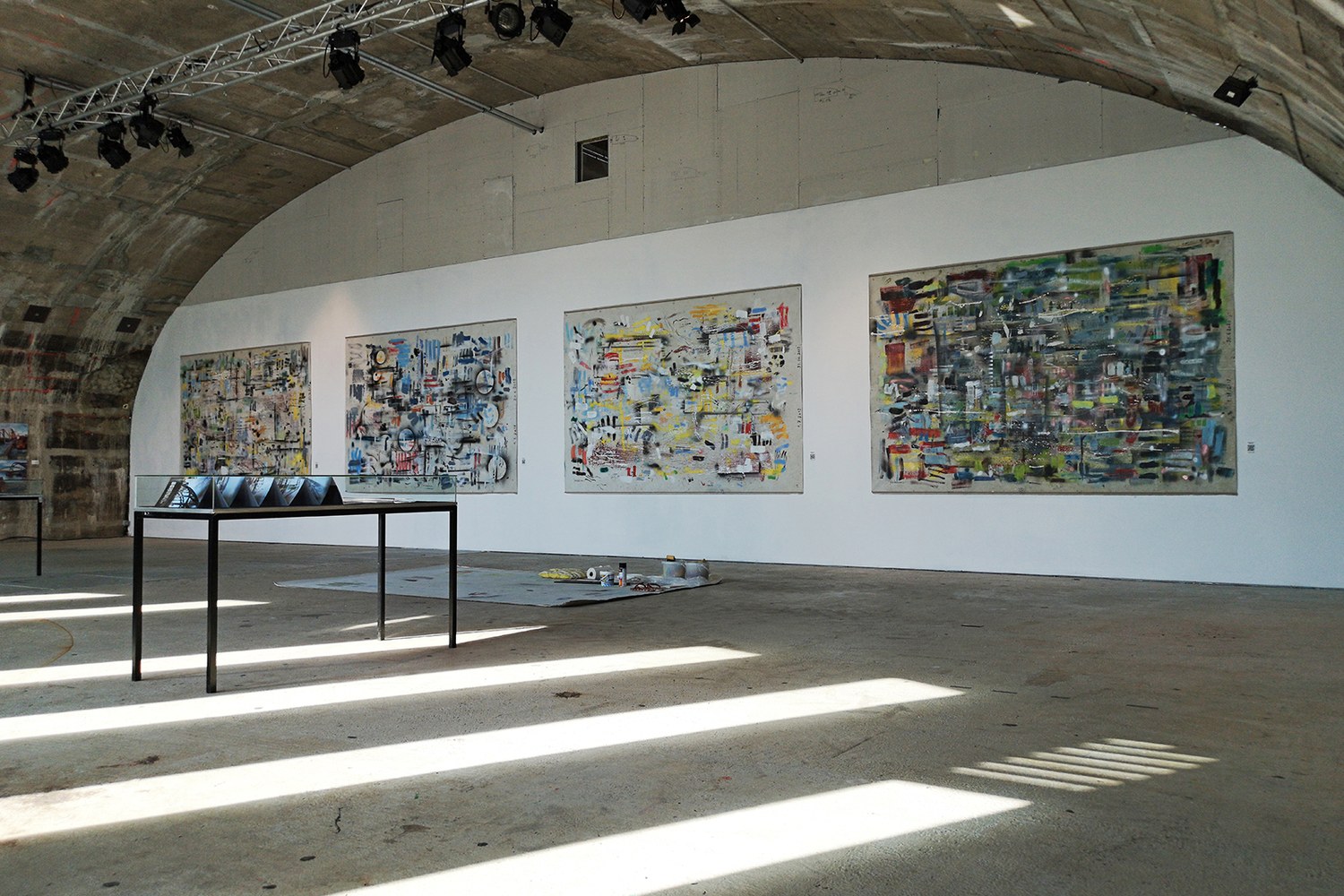
Contemporary art fills the space beneath Honsell Bridge.16
Location 16
Kunstverein Familie Montez
Best suited to: creative corporate formats, cultural events and informal talks
The art association occupies the arches beneath Honsell Bridge beside Hafenpark. Exposed concrete, large artworks and the long hall create an urban setting far removed from conventional conference architecture. Corporate requests are coordinated with the Kunstverein through an event partner and assessed for feasibility.
A keynote can sit inside an open evening of art, music and conversation. A tightly scheduled conference requires much more structure. Seating, acoustics, projection and separation from the rest of the hall are important production decisions. Plan them deliberately and the venue makes it easy for conversation to continue after the talk.
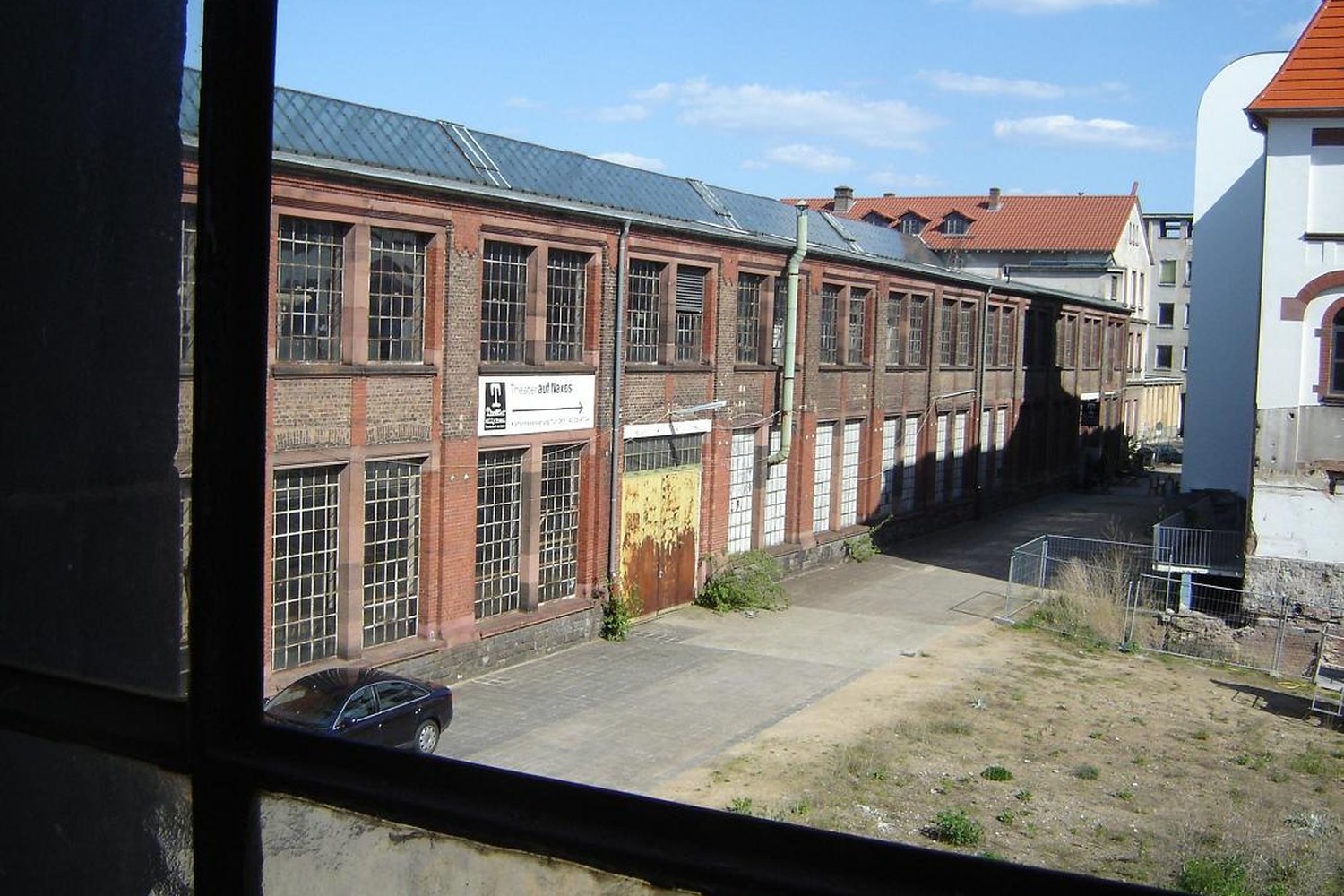
The former Naxos-Union machine hall is now a performing arts production house.17
Location 17
Produktionshaus NAXOS
Best suited to: experimental conferences, cultural programmes and talks with a workshop character
Produktionshaus NAXOS occupies a listed machine hall built in 1906 and 1907. The main hall covers 1,200 square metres, while fire regulations limit the entire building to 199 people. For talks, the heated theatre box with 154 fixed tiered seats is an interesting alternative. A smaller performance space, foyer and rehearsal room can hold additional programme elements.
NAXOS retains the raw character of a production site. It suits formats intended to feel exploratory, artistic or deliberately unfinished. The main hall is unheated and can only be warmed to a limited extent in cold weather. Noise restrictions impose further limits. Weather, setup time and the required finishing time all belong in the first enquiry.
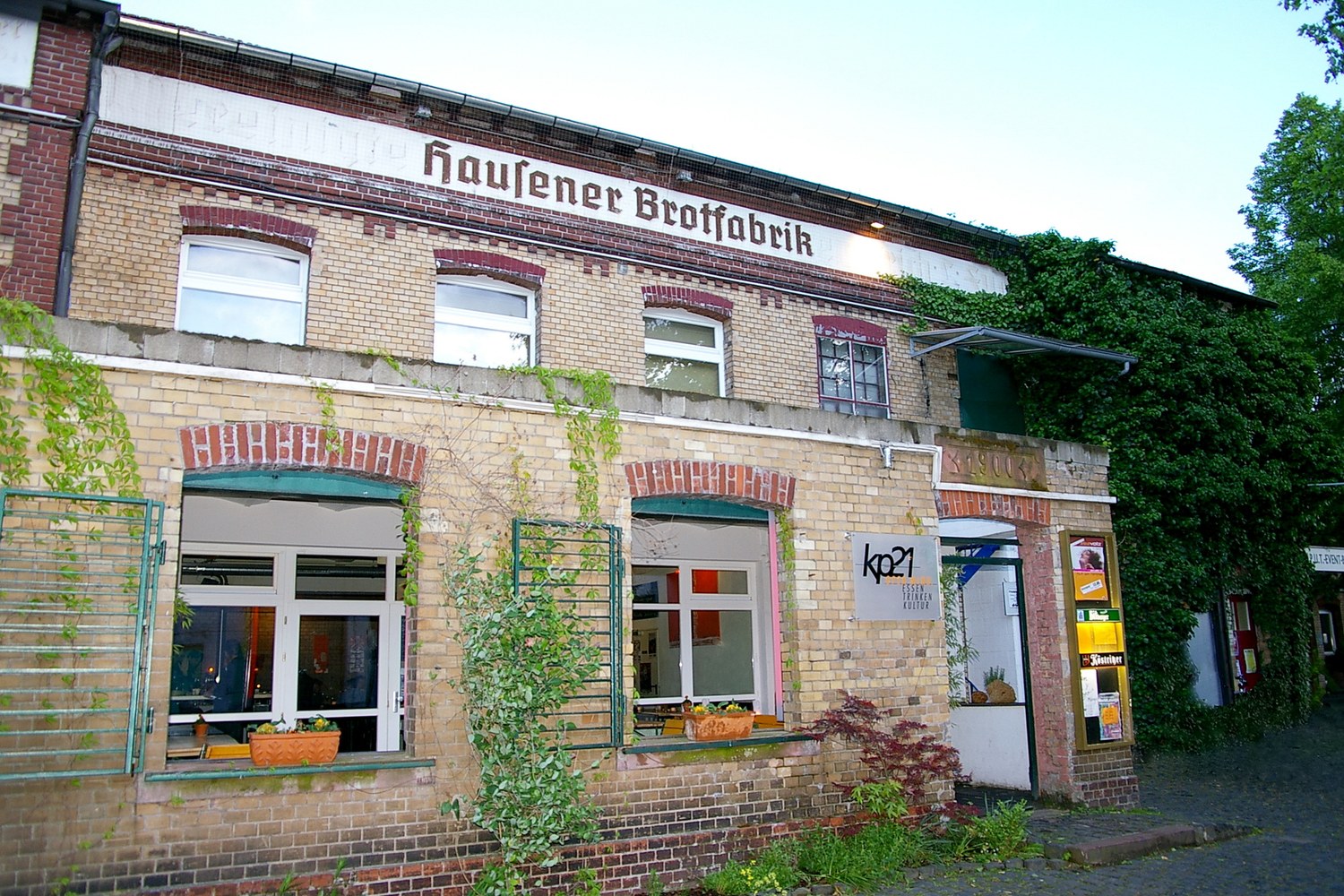
Brotfabrik is a cultural centre inside a former industrial building.18
Location 18
Brotfabrik Frankfurt
Best suited to: press conferences, workshops, smaller meetings and audience-focused keynotes
Brotfabrik's main hall is regularly used for concerts, readings, discussions and live podcasts. It is also available for corporate events, press conferences, workshops, seminars and receptions. According to the operator, event technology and a grand piano can be provided.
Old parquet flooring, brick walls and the active cultural programme give the hall an unforced atmosphere. It suits a keynote that depends on proximity to the audience. Access to the event hall is not barrier-free, however. Organisers should establish what support is possible and whether the building is suitable for the invited audience before confirming the booking.
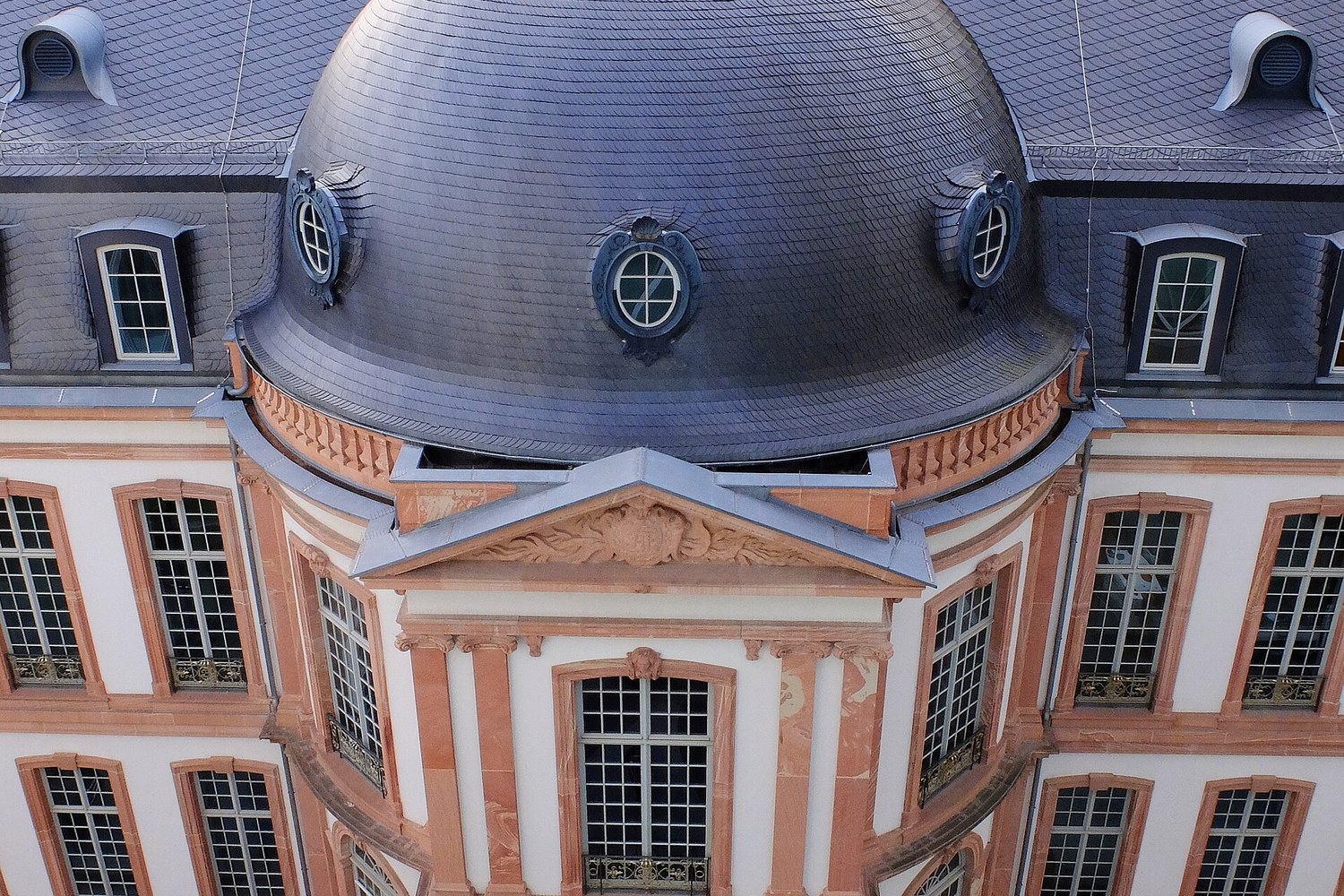
The reconstructed palace façade leads to contemporary event rooms inside.19
Location 19
Palais Frankfurt
Best suited to: brand events, conferences and keynotes using large-scale media
Behind the reconstructed Baroque façade of Palais Thurn und Taxis are deliberately restrained event rooms. The 560-square-metre Momentum room seats 400 in theatre style according to the operator. An installation of 93 LED displays can change the room visually. A gallery, foyer, courtyard and Beletage provide further spaces.
The appeal lies in the contrast between a historic address and an interior designed for digital media. A keynote can use calm background imagery or treat the room as a scenic surface. Ninety-three displays also invite too much movement. Good direction uses them selectively and leaves enough visual quiet around the speaker.
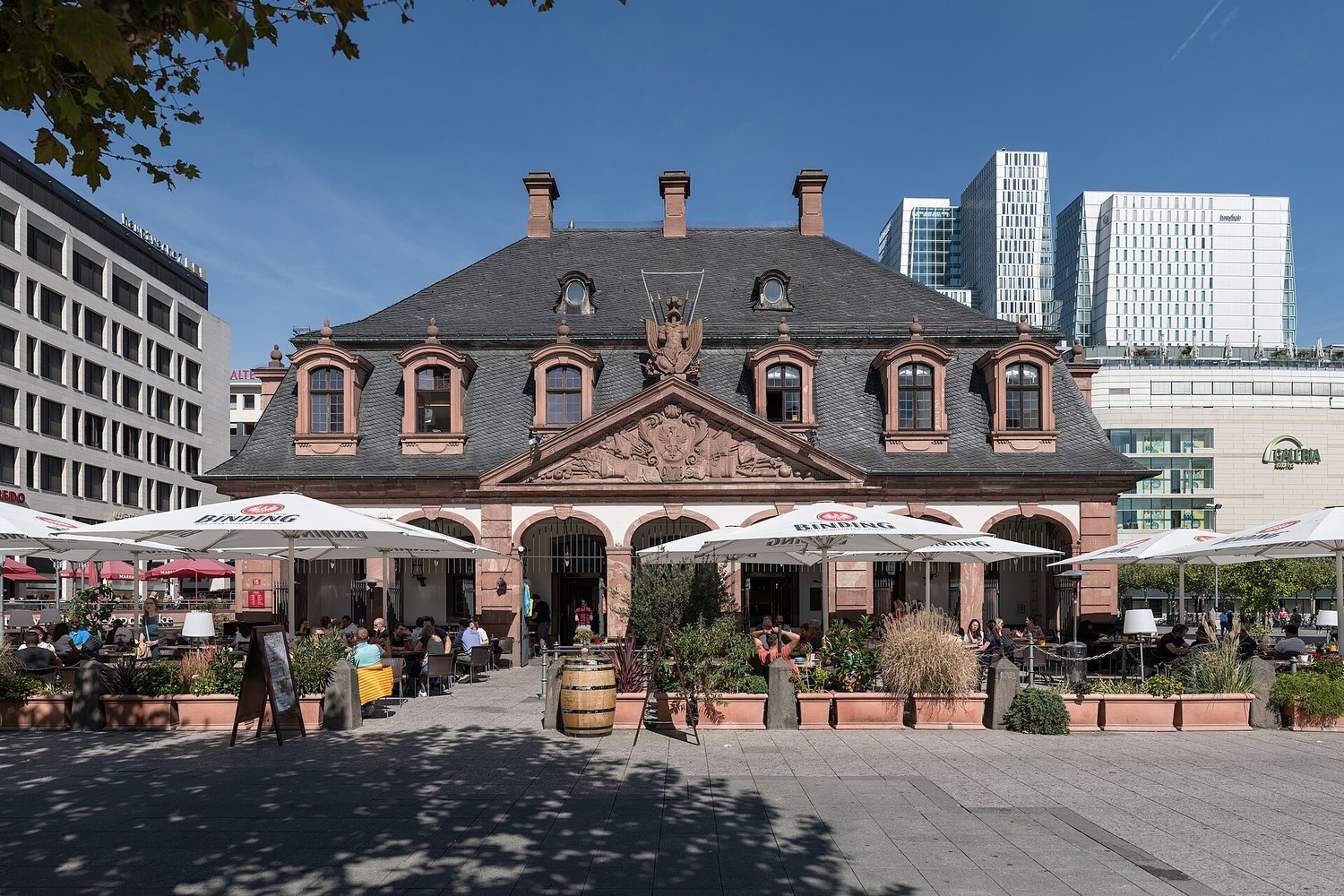
Dialogmuseum is located below Hauptwache; the photograph shows its central Frankfurt setting.20
Location 20
Dialogmuseum
Best suited to: workshops, professional development and smaller keynotes with an experiential element
Dialogmuseum at Hauptwache hires out bright workshop rooms and its foyer. A projector, flip chart and camera for recordings or live streams are available. The venue is better suited to professional development and smaller events than a large stage production, particularly when a short talk should lead directly into discussion and exercises.
The associated programme is the venue's defining feature. In the Dialogue in the Dark exhibition, blind or visually impaired guides lead visitors through completely dark rooms, changing how they perceive space and communication. This deserves more care than a decorative incentive. With a suitable subject and enough time, the experience can contribute seriously to a programme about leadership, communication or accessibility.
Choose the venue through the programme, not the photographs
Capacity is only the first test. The venue also has to support the kind of attention the programme needs. A concise talk for 150 executives calls for a different room than a public conference with parallel workshops. For a keynote, the essentials are a clear view of the stage, controllable light, intelligible sound and a schedule that leaves the speaker enough time to rehearse with the technical team.
These Frankfurt venues meet those needs in very different ways. Bring the location into programme planning early and the reception, keynote, breaks and conversations can feel like one coherent event rather than separate bookings. If you are planning an artificial intelligence keynote at one of these venues, I would be pleased to shape the talk around the room, the audience and the purpose of the day.
Research checked on 26 July 2026. Room sizes, capacities, prices, available event dates and technical services may change. The venue operator's current information and quotation are authoritative.
About the author
Jan Ditgen is an AI keynote speaker. He combines clear explanation with live demonstrations and an experienced eye for the way a room, stage and programme shape a talk.
1.The historic façade of the Alte Oper on Opernplatz. Photograph: DXR. Source: original file on Wikimedia Commons. Licence: CC BY-SA 4.0. Edited to fit the consistent page format. The edited image version is made available under the same licence. This photograph is also used as the hero image.↩
2.Gesellschaftshaus stands within Frankfurt's Palmengarten. Photograph: Carl Ha. Source: original file on Wikimedia Commons. Licence: CC BY-SA 4.0. Edited to fit the consistent page format. The edited image version is made available under the same licence.↩
3.Classic cars and brick architecture define Klassikstadt. Photograph: Matti Blume. Source: original file on Wikimedia Commons. Licence: CC BY-SA 2.0 or later. Edited to fit the consistent page format. The edited image version is made available under the same licence.↩
4.Kap Europa is one of Messe Frankfurt's dedicated congress venues. Photograph: Epizentrum. Source: original file on Wikimedia Commons. Licence: CC BY-SA 3.0. Edited to fit the consistent page format. The edited image version is made available under the same licence.↩
5.The listed Festhalle opened in 1909. Photograph: Whgler. Source: original file on Wikimedia Commons. Licence: CC BY-SA 4.0. Edited to fit the consistent page format. The edited image version is made available under the same licence.↩
6.The Römer is Frankfurt's historic city hall. Photograph: Dietmar Rabich. Source: original file on Wikimedia Commons. Licence: CC BY-SA 4.0. Edited to fit the consistent page format. The edited image version is made available under the same licence.↩
7.Frankfurt's stadium also operates as a business event venue. Photograph: Patrik Meyer. Source: original file on Wikimedia Commons. Licence: CC BY-SA 4.0. Edited to fit the consistent page format. The edited image version is made available under the same licence.↩
8.The lecture theatre is designed for conferences and readings. Photograph: Raimond Spekking. Source: original file on Wikimedia Commons. Licence: CC BY-SA 4.0. Edited to fit the consistent page format. The edited image version is made available under the same licence.↩
9.The Casino forms part of the listed ensemble at Campus Westend. Photograph: Mastad. Source: original file on Wikimedia Commons. Licence: CC BY-SA 3.0. Edited to fit the consistent page format. The edited image version is made available under the same licence.↩
10.The academy stands on Römerberg; the photograph shows its Old Town setting. Photograph: Dr. Thomas Liptak. Source: original file on Wikimedia Commons. Licence: CC BY-SA 4.0. Edited to fit the consistent page format. The edited image version is made available under the same licence.↩
11.Haus am Dom stands between Frankfurt Cathedral, the Römer and the river. Photograph: Dguendel. Source: original file on Wikimedia Commons. Licence: CC BY 3.0. Edited to fit the consistent page format. The edited image version is made available under the same licence.↩
12.Senckenberg offers museum halls and the neighbouring Jügelhaus. Photograph: Ugureisberg. Source: original file on Wikimedia Commons. Licence: CC BY-SA 4.0. Edited to fit the consistent page format. The edited image version is made available under the same licence.↩
13.A glazed cone defines the museum building on Schaumainkai. Photograph: dontworry. Source: original file on Wikimedia Commons. Licence: CC BY-SA 3.0. Edited to fit the consistent page format. The edited image version is made available under the same licence.↩
14.The Historical Museum stands between Römerberg and the River Main. Photograph: lienyuan lee. Source: original file on Wikimedia Commons. Licence: CC BY 3.0. Edited to fit the consistent page format. The edited image version is made available under the same licence.↩
15.The light-filled new wing extends the historic Rothschild Palace. Photograph: Thomas Kroemer. Source: original file on Wikimedia Commons. Licence: CC BY-SA 4.0. Edited to fit the consistent page format. The edited image version is made available under the same licence.↩
16.Contemporary art fills the space beneath Honsell Bridge. Photograph: Rosa Lachenmeier. Source: original file on Wikimedia Commons. Licence: CC BY-SA 4.0. Edited to fit the consistent page format. The edited image version is made available under the same licence.↩
17.The former Naxos-Union machine hall is now a performing arts production house. Photograph: Sandy Hook. Source: original file on Wikimedia Commons. Licence: CC BY-SA 3.0. Edited to fit the consistent page format. The edited image version is made available under the same licence.↩
18.Brotfabrik is a cultural centre inside a former industrial building. Photograph: User -jha-. Source: original file on Wikimedia Commons. Licence: CC BY-SA 3.0. Edited to fit the consistent page format. The edited image version is made available under the same licence.↩
19.The reconstructed palace façade leads to contemporary event rooms inside. Photograph: Ziko van Dijk. Source: original file on Wikimedia Commons. Licence: CC BY-SA 4.0. Edited to fit the consistent page format. The edited image version is made available under the same licence.↩
20.Dialogmuseum is located below Hauptwache; the photograph shows its central Frankfurt setting. Photograph: DXR. Source: original file on Wikimedia Commons. Licence: CC BY-SA 4.0. Edited to fit the consistent page format. The edited image version is made available under the same licence.↩